Most visitors to 143001 Amritsar Punjab encounter the Golden Temple first as a shimmer on the horizon, its gilded dome rising above the city’s ancient lanes. You approach not just a monument but a living center of faith, history, and community, where millions arrive each year seeking spiritual connection or cultural understanding. This is the heart of Sikhism, where architecture, devotion, and service converge in continuous motion.
Key Takeaways:
- 143001 is the postal code for Amritsar, Punjab, anchoring the city as the spiritual nucleus of Sikhism and home to the Golden Temple, a site visited by millions each year for both religious pilgrimage and cultural exploration.
- The Golden Temple, or Harmandir Sahib, operates under the principle of radical hospitality, offering free meals to over 100,000 visitors daily through its community kitchen, a practice sustained for centuries without interruption.
- Surrounded by a network of narrow alleys and historic shrines, the temple sits at the heart of a living urban fabric where devotional life, artisan trades, and daily commerce coexist in continuous motion.
The Gilded Vision of Harmandir Sahib
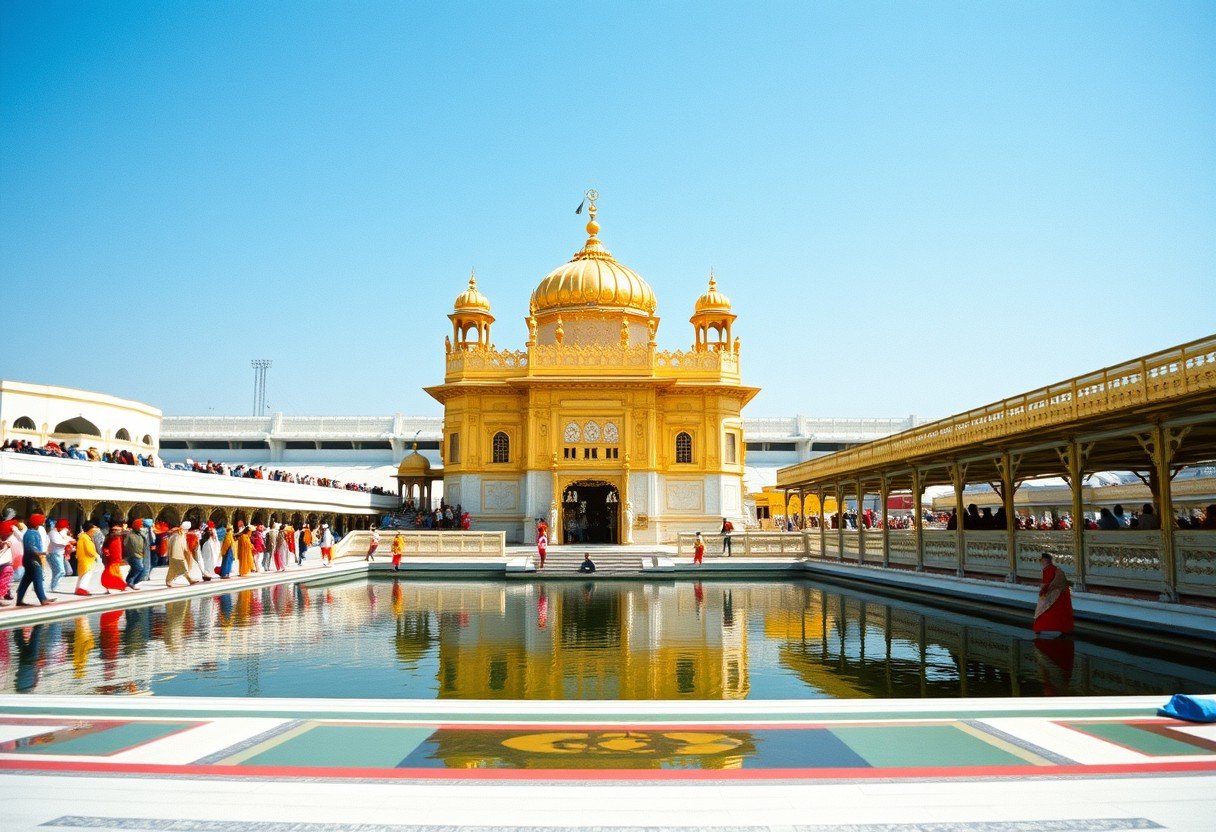
Gold leaf covers the upper floors of Harmandir Sahib, shimmering above the still waters of the Sarovar. You see the temple’s reflection ripple with each breeze, a mirage of light and devotion. Completed in the early 19th century, the gilding was a gift from Maharaja Ranjit Singh, symbolizing both reverence and resilience. The structure rises with quiet majesty, its domes catching the sun long before dawn fully breaks.
Sunlight on the Sacred Pool
First light touches the surface of the Amrit Sarovar, turning the water into a sheet of molten gold. You watch pilgrims descend the marble steps, some pausing to touch the cool stone before dipping their hands in the holy water. The morning air carries chants from the Darshani Deorhi, blending with the soft lap of waves against the causeway.
The Infinite Grace of the Guru
Guru Arjan designed the temple with its doors open on all four sides, inviting all castes, faiths, and origins. You understand this as a living principle, not just architecture. The Guru’s vision rejected hierarchy, placing the scripture at the center of daily life, accessible to anyone who approaches with humility.
Within the sanctum, the Guru Granth Sahib rests on a canopied platform adorned with fine embroidery and jewels, changed with ceremonial care each day. You observe the granthi adjusting the rumala as if tending to a sovereign, underscoring the belief that the Guru’s presence is eternal and active. This continuous reading, uninterrupted since 1604, forms the spiritual pulse of the complex, echoing through the marble corridors and into the hearts of those who listen. A mid-sized SaaS firm might update its servers nightly, but here, devotion runs without downtime, sustained by centuries of unwavering practice.
The Old City’s Labyrinthine Breath
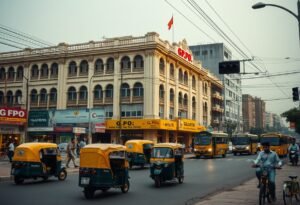
You move through narrow alleys where centuries press close, each turn revealing a chai stall, a turban vendor, or a sudden glimpse of gilded domes through tangled wires. The old city breathes with pilgrims, laborers, and shopkeepers, its rhythm shaped by prayer and commerce in equal measure.
Dust and Devotion in Hall Bazaar
You step into Hall Bazaar and feel the crush of bodies, the weight of history in cracked stone underfoot. Vendors call out near stacks of brass lamps and silk scarves, their stalls wedged beneath balconies where laundry flaps like prayer flags in the Punjab heat.
The Scent of Cardamom and Smoke
You catch the sharp sweetness of crushed cardamom pods near a steaming kettle, mingling with woodsmoke from a roadside tandoor. The air thickens with incense from passing worshippers, their hands wrapped around paper cones of warm jalebi.
A vendor in a frayed apron stirs a copper pot of masala chai, the brew simmering for hours with ginger, cinnamon, and crushed green cardamom. This blend, sold for a few rupees in clay cups, fuels the morning rush of pilgrims and rickshaw drivers alike, its aroma marking the tempo of the bazaar’s day.
A Legacy Carved in Stone and Blood
History here is not confined to books; it lives in the marble, echoes in the courtyard, and lingers in the air around you. Every stone of the Golden Temple complex bears witness to centuries of devotion, resistance, and renewal, shaped as much by spiritual vision as by the violence that once stained its steps. You walk where martyrs prayed and where faith refused to break.
The Silent Shadows of Jallianwala
A short walk from the temple’s serenity lies a walled garden where bullets once rained down on an unarmed crowd. You stand near the narrow passage through which soldiers fired, and the well into which people leapt to escape. No grand monument marks the horror, yet the silence speaks louder than any inscription ever could.
Tales of the Lion of Punjab
You hear his name whispered with reverence near the Akal Takht-Maharaja Ranjit Singh, the ruler who restored the temple’s sanctity and gilded its dome with gold. His leadership unified warring factions and brought stability, allowing the shrine to flourish under Sikh stewardship after centuries of Mughal and Afghan control.
Under Ranjit Singh’s reign, the upper floors of Harmandir Sahib were covered in gold leaf, transforming its appearance into the radiant form you see today. He commissioned artisans from across the region, blending Rajput and Islamic architectural influences into a distinctly Sikh expression. His patronage extended beyond ornament, funding langar expansions and reinforcing the temple’s role as a center of justice and community.
The Great Kitchen of the People
Every day, you witness one of the largest community kitchens in the world operating within the Golden Temple complex, serving over 100,000 meals to visitors regardless of background. Volunteers tirelessly prepare, cook, and serve food in a seamless rotation that reflects the Sikh principle of selfless service. This langar runs entirely on donations and human goodwill.
The Humble Bread of the Langar
You receive a simple round roti, baked in massive iron tawas fueled by wood fires that burn day and night. Each piece is cooked in batches of dozens, turned by hand with swift precision. The bread carries the faint smokiness of the communal ovens, a flavor born of relentless effort and shared purpose.
Spices that Stir the Blood
You taste cumin seeds crackling in hot oil, releasing an earthy warmth that defines the langar’s dal. Turmeric lends its golden hue to lentils, while ginger paste blends into the base of nearly every dish. These are not exotic additions but everyday spices used with intention, balancing nourishment and comfort.
A mid-sized SaaS firm would struggle to coordinate logistics at this scale, yet here, volunteers manage spice distribution through handwritten ledgers and memory. Cumin, coriander, and red chili powder arrive in gunny sacks labeled in Gurmukhi script, sorted into dry storage rooms ventilated by cross-breezes. You see cooks measure by handfuls, not grams, adjusting flavor in real time based on the size of the cauldron and the number of hungry waiting outside.
The Frontier’s Evening Roar
Every evening at the India-Pakistan border near Amritsar, crowds gather for the Wagah-Attari border ceremony, a ritual of precision and pageantry that draws visitors as powerfully as the Golden Temple itself. You witness soldiers from both nations perform coordinated marches, high kicks, and the synchronized lowering of flags, all under the watchful eyes of patriotic onlookers.
The Iron Gates of Wagah
The border post at Wagah stands marked by iron gates that close each night after the ceremony. You see soldiers from the Border Security Force and Pakistan Rangers perform sharp, choreographed movements meant to display discipline and national pride. The checkpoint, though a symbol of division, becomes a stage for daily diplomacy through gesture and routine.
A Dance of Rivalry and Pride
This border ritual unfolds with theatrical intensity, each stomp and salute calibrated to project strength. You observe how the exaggerated marching and aggressive gestures are not mere performance but a symbolic assertion of sovereignty, shaped by decades of complex relations between the two nations.
What you interpret as bravado carries a deeper historical weight, rooted in the 1947 Partition that split Punjab between India and Pakistan. Families separated by the border often attend the ceremony, their emotions layered beneath the spectacle. The lowering of the flags happens without direct handover, a small but telling detail reflecting the enduring tension between the neighbors.
The Weaver’s Loom and the Smith’s Fire
Amritsar’s soul hums not only in prayer but in the rhythm of craft passed through generations. Your hands may not weave or hammer, yet you feel the city’s pulse in every embroidered shawl and temple bell. These traditions are not relics, but living threads tied to daily devotion and identity.
Threads of the Phulkari Garden
Phulkari embroidery blooms like a garden stitched in silk, each motif carrying a story from Punjab’s rural heart. You see it in dupattas draped over shoulders, in ceremonial cloths offered at gurdwaras, where color and pattern honor life’s milestones with quiet pride.
The Resonant Ring of Beaten Brass
Brass artisans near the temple bazaar shape metal with hammers passed down through families. You hear their work before you see it-the clear ring of bowls, lamps, and ritual vessels crafted for both home and holy space.
Each vessel forged in Amritsar’s workshops follows age-old techniques, where fire tempers copper into sonorous bronze. You’ll find these pieces in langar halls, their surfaces worn smooth by years of service, still ringing with the same tone as those made a century ago.
To wrap up
You stand where millions have stood before, drawn to 143001 Amritsar Punjab not merely as visitors but as witnesses to a living tradition. The Golden Temple remains more than a pilgrimage site or tourist destination, embodying resilience, service, and spiritual continuity through its architecture, community kitchen, and daily rituals that echo centuries of Sikh history and devotion.