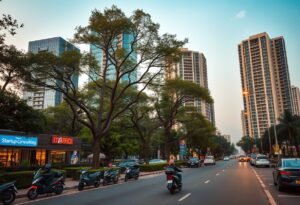
It’s the postal code that routes to more than just addresses-it marks the pulse of a city where ancient trade routes converge with modern enterprise. You walk its streets and feel the momentum of textile merchants, software founders, and street vendors all moving in sync. This is Indore, a hub where commerce isn’t built on chance but on generations of calculated exchange, geographic advantage, and an unrelenting work ethic.
The Holkar Heritage
Maratha Mercantile Roots
You trace your commercial lineage to the 18th-century Maratha networks that linked inland trade routes with coastal ports, where Holkar rulers taxed and protected caravans carrying indigo, opium, and textiles, turning Indore into a node of regional exchange long before British roads reached the plateau.
The Rajwada Influence
You operate within the shadow of the original Rajwada palace, the seven-story seat of Holkar administration, whose central courtyard once hosted grain auctions and treaty signings, embedding governance and trade in a single architectural footprint.
The palace’s reconstruction after the 1834 fire preserved its commercial function, with ground-floor arcades repurposed into permanent shops, a design choice that institutionalized market activity at the city’s symbolic heart, a pattern still visible in today’s congested bazaars ringing the site.
The Malwa Marketplace
Malwa’s commercial rhythm pulses through its centuries-old marketplaces, where tradition and trade converge. You encounter merchants dealing in handwoven fabrics, aromatic spices, and bulk grain shipments, all operating within networks refined over generations. The region’s geographic centrality enhances its role as a distribution nexus for central India.
Cotton and Textile Dominance
Cotton has long dictated the economic tempo of Malwa, with your supply chains feeding spinning mills across Gujarat and Maharashtra. Indore’s textile exchanges handle bales of locally grown hybrid cotton, processed in decentralized ginning units before entering national and export circuits. This raw material flow sustains thousands of downstream jobs.
Grain Trade Centers
Grain mandis in Ujjain and Mandsaur rank among the most active in Madhya Pradesh, where your transactions influence regional pricing. These hubs aggregate wheat, soybean, and pulses from smallholder farms, channeling them into private and public storage systems. Electronic trading platforms now supplement open-auction methods.
Traders in Mandsaur’s grain market routinely handle consignments exceeding 10,000 quintals during harvest peaks, with private silos expanding to meet demand. You rely on real-time moisture testing and standardized grading to maintain quality, while railway sidings enable direct dispatch to processing zones in Delhi and Punjab. The integration of NCDEX-linked price feeds has reduced information asymmetry for smaller vendors.
The Night Economy of Sarafa
As daylight fades, Sarafa Bazaar transforms from a hub of gold traders into a bustling open-air food market, a rhythm unchanged for decades. You walk among clusters of diners seated on low stools, the scent of frying pav bhaji and grilled kebabs mixing with lingering traces of polished silver. Temporary stalls replace jewelry counters, serving everything from sweet malpua to spicy dahi vada, drawing crowds well past midnight.
Bullion and Street Food
By morning, the same cobbled lanes echo with the clink of gold scales and invoice calculators. You see vendors unlocking steel grilles, resetting their shops after the night’s culinary shift. This dual-use model maximizes space in a high-rent zone, where a single square foot serves two thriving economies within 24 hours, a practical innovation born of density and demand.
Jewelry Market Traditions
Trading in Sarafa follows customs older than the city’s electric grid. You observe elders exchanging coins not just as currency but as ceremonial tokens during agreements, a gesture binding trust beyond paperwork. Gold is weighed with antique brass scales, and deals often begin with a shared cup of cutting chai, rituals reinforcing continuity in a fast-changing market.
Generations of jewelers have passed down not only craftsmanship but also a coded verbal shorthand used during auctions, a dialect unintelligible to outsiders. You hear rapid exchanges of numbers and syllables that convey karat purity, weight, and premium in a single phrase, a linguistic efficiency honed over decades of high-volume trade. This oral tradition persists even as digital ledgers begin to appear in back offices.
Industrial Arteries
Industries in 452001 thrive along well-established corridors that link manufacturing units with national supply chains. Your access to concentrated zones of production, supported by decades of infrastructural investment, positions this region as a core node in Central India’s industrial network.
Pithampur Proximity
Pithampur’s industrial belt lies just beyond the city’s southern edge, offering you direct access to automotive and engineering clusters. This adjacency enables shared vendor networks, reducing lead times and creating economies of scale for manufacturers operating in both zones.
Transport Hub Logistics
A multi-modal transport framework surrounds you, combining rail sidings, freight terminals, and national highways. The city’s location at the intersection of NH 3 and NH 52 places it within 400 kilometers of four major state capitals, streamlining cargo movement across regions.
Indian Railways maintains dedicated freight corridors that pass near the district, allowing your outbound shipments to integrate with containerized services to JNPT and Mundra ports. Daily parcel trains carry auto components and textiles, while cold storage units along the Ahmedabad-Indore rail line support perishable exports. Road transport dominates last-mile distribution, with private logistics firms operating consolidated delivery routes to tier-2 cities across Maharashtra and Rajasthan.
The Cleanest Metropolis
Indore consistently ranks among India’s cleanest cities, a distinction maintained through coordinated civic efforts and sustained public participation. The city’s waste management systems operate with precision, setting benchmarks for urban sanitation nationwide.
Civic Pride and Sanitation
You take pride in your surroundings, and Indore’s residents do the same. Daily door-to-door waste collection, strict enforcement of segregation rules, and community-led cleanliness drives keep neighborhoods visibly tidy. A mid-sized SaaS firm in Vijay Nagar reports fewer pest issues and higher employee satisfaction due to the area’s consistent hygiene standards.
Infrastructure Development
You benefit from wide, well-drained roads and strategically placed waste processing units that reduce overflow and odor. The city’s underground drainage network covers over 90 percent of inhabited zones, minimizing waterlogging during monsoon seasons.
Indore’s infrastructure integrates sanitation with urban mobility. The same corridors that host morning waste collection also support dedicated bus routes and cycling lanes. Automated waste compactors at transfer stations reduce manual handling, cutting contamination risks and improving efficiency. Street lighting and footpath maintenance are synchronized with sanitation cycles, ensuring public spaces remain functional and clean throughout the year.
The Digital Frontier
Indore’s transformation into a digital hub is accelerating, with infrastructure and policy aligning to support rapid tech growth. You’re witnessing a shift where traditional commerce meets innovation, exemplified by initiatives like 🚀 Day 1/30: Indore: The Export Powerhouse of Central …, showcasing real-time glimpses of this evolution.
Tech Park Expansion
Plans for a second phase at the Pithampur Tech Park double the available IT space, accommodating over 50 new firms. You’ll find multinational developers investing in Grade A offices, drawn by reliable power, fiber connectivity, and proximity to manufacturing zones that support tech-integrated logistics.
Startup Ecosystem
Over 300 registered startups operate in Indore, many clustered around the Atal Incubation Centre. You’re seeing homegrown ventures in fintech, agritech, and SaaS secure early-stage funding, supported by local angel networks and state-backed innovation grants.
One mid-sized SaaS firm, founded in 2020 near Vijay Nagar, scaled to serve 1,200 clients across tier-2 cities without external venture capital. You’re observing a pattern where lean operations, low overhead, and access to skilled engineering graduates from nearby institutes enable sustainable growth, distinguishing Indore’s model from flashier, capital-heavy ecosystems.
Conclusion
You operate at the heart of 452001, where Indore’s legacy as Central India’s commercial powerhouse thrives on adaptability and scale. From the Holkar era’s foundations to today’s round-the-clock markets and tech-driven startups, your environment blends tradition with relentless innovation. A mid-sized SaaS firm in Pithampur runs parallel to street vendors in Sarafa, both powered by the same pulse of enterprise. This city does not pause, and neither should you.