
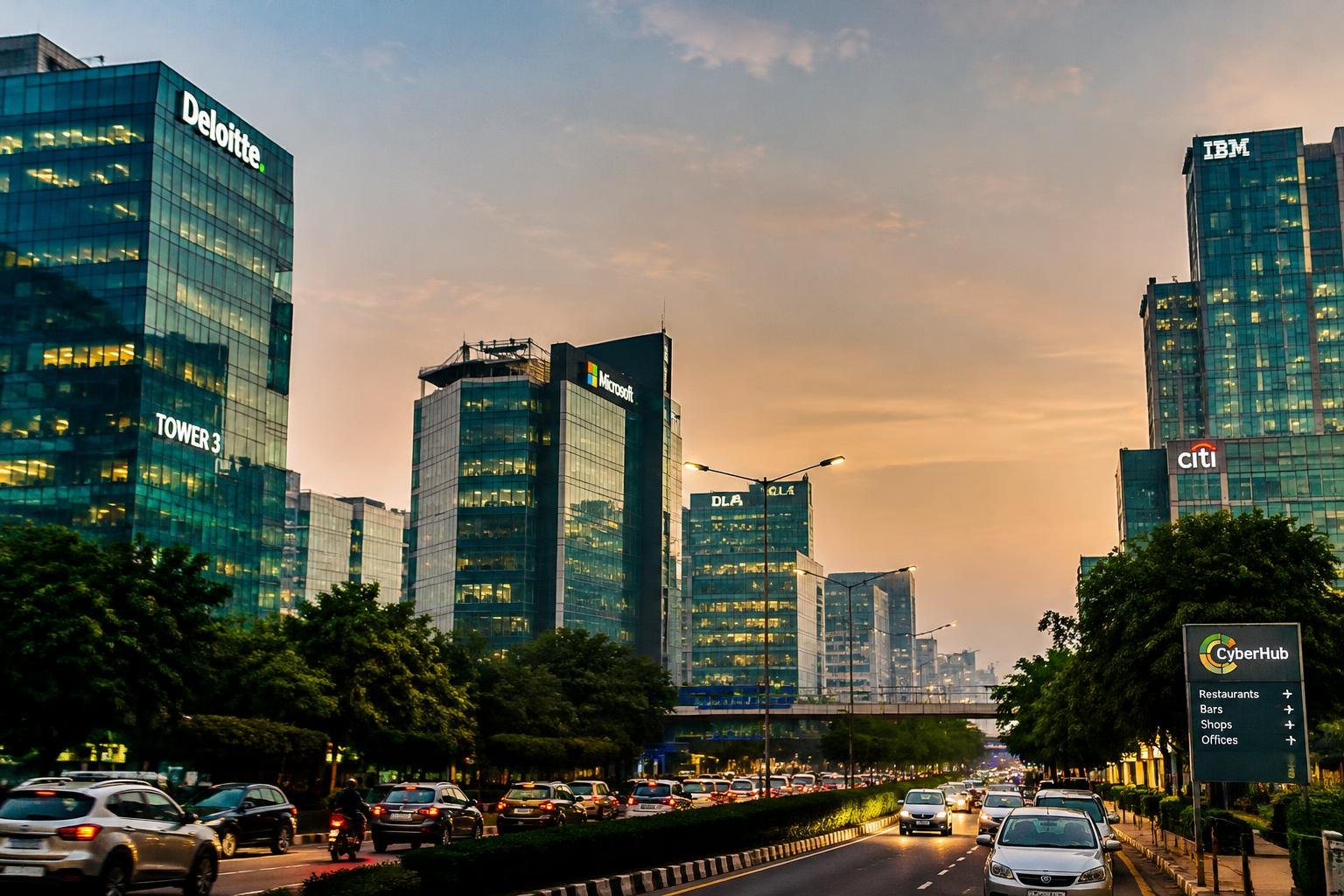
Sector 17 sits within Gurugram’s established business districts, where corporate offices, IT firms, banks, and other financial-services companies serve clients across the city and the wider National Capital Region. If you work or do business here, the 122001 postal address places you in a commercial area with offices, professional services, and everyday amenities close at hand.
Understanding Gurugram Sector 17
Sector 17 sits within Gurugram’s established urban fabric, where local roads connect residential areas with commercial corridors and civic services. Its position gives you access to central parts of the city while keeping major employment districts within reach. The sector also functions as a familiar reference point for navigating this part of Gurugram, with routes linking it to key roads and neighbouring areas rather than isolating it as a standalone destination.
Sector 17’s position within Gurugram
Located in central Gurugram, Sector 17 lies near established neighbourhoods and the city’s older commercial areas. You can use it as a practical base for reaching sectors around the central grid, while routes toward New Railway Road connect the area with other parts of the city. This position places Sector 17 between everyday local destinations and larger employment zones, giving it a role in Gurugram’s broader pattern of movement and activity.
Access to transport and nearby business districts
From Sector 17, you can reach major city routes through roads including New Railway Road and the Old Delhi-Gurugram Road, with onward connections toward NH 48. Gurugram Railway Station serves rail travel, while HUDA City Centre, now Millennium City Centre, provides access to the Yellow Line metro farther south. Business districts around Cyber City and Udyog Vihar are reachable by road, though journey times vary with traffic and route conditions.
Types of Properties and Business Spaces
Across Sector 17, property ranges from independent commercial buildings and office suites to shops, apartments, and builder-floor homes. You will also find mixed-use developments that combine workspaces with street-level businesses and residences. These formats serve different day-to-day needs, from a professional practice requiring a private office to a household seeking a home near major employment areas. Building layout, access arrangements, and the mix of neighboring uses vary by property.
Offices, retail, and mixed-use spaces
For business use, you will encounter standalone office buildings, subdivided office floors, and commercial units suited to consultancies, financial services, and technology teams. Ground-floor retail spaces typically accommodate customer-facing businesses such as pharmacies, cafés, and convenience stores. Mixed-use properties bring offices, shops, and sometimes homes into one development, with separate entrances or shared facilities depending on the building. A typical office suite includes private rooms alongside an open work area and reception space.
Residential options near corporate and IT hubs
Residential choices include apartments in multi-storey complexes, independent builder floors, and houses on established residential streets. You might choose an apartment with shared lifts and building services, or a floor with a separate entrance and a more independent layout. Nearby housing serves professionals living alone, families, and employees sharing accommodation. Common features include balconies, dedicated parking, security arrangements, and access to local shops, with availability differing between individual buildings.
- Office suites with reception areas
- Ground-floor shops facing local streets
- Mixed-use buildings with separate entrances
- Apartments with shared lifts
- Builder floors with independent access
Sector 17 as a Corporate, IT, and Financial-Services Hub
Business activity in Sector 17 reflects Gurugram’s mix of corporate offices, technology firms and financial services. For your understanding of local demand, the key factor is how these employers rely on office premises and nearby business support, from professional services to everyday facilities for staff. The sector’s commercial role sits within a wider city economy that includes established corporate districts and technology-led operations, linking local businesses to clients, suppliers and teams across Gurugram.
Major employment sectors and business activity
Corporate administration, information technology, consulting and financial services shape employment demand around Sector 17. You will find business activity associated with company offices, technology operations, banking and other professional services, alongside firms serving those larger employers. These roles generate demand for workspaces and routine commercial services, while the wider Gurugram economy brings in companies connected to technology parks and corporate centres elsewhere in the city. Typical activity ranges from client meetings and back-office work to finance and IT support.
Commercial infrastructure and supporting services
Office buildings and established commercial premises form the working base for firms in Sector 17, with supporting services serving employees and business visitors. Your day-to-day business needs may include banking, food outlets, office supplies, printing and professional services within the surrounding commercial network. Road connections link the sector to other parts of Gurugram, while telecom and utility services underpin office operations. Together, these facilities support activities such as meetings, staff commutes and routine financial transactions.
Factors for Choosing a Location in Sector 17
Set your shortlist against the daily demands of your business, not just the property’s advertised features. Your choice should account for how staff, clients, suppliers, and service providers will use the site, as well as the space and operating arrangements your work requires. A practical assessment covers access at different times, building management, fit-out conditions, and the terms attached to occupancy, giving you a clear basis for evaluating individual properties in Sector 17.
Connectivity, amenities, and workplace access
Assess each address by tracing staff and client journeys from nearby roads, public transport points, and adjoining business districts. Check whether the route remains practical during peak-hour traffic and whether the building provides visitor parking, secure entry, lifts, and accessible entrances. Nearby banks, restaurants, pharmacies, and courier services can support routine operations, while the location of loading areas matters if your team receives equipment or regular deliveries.
Budget, property needs, and intended use
Match the quoted rent or purchase terms to the usable floor area, maintenance charges, parking costs, and fit-out obligations. A client-facing financial-services office may need reception space and private meeting rooms, while a technology team may prioritise flexible desks, power capacity, and cabling routes. Confirm permitted use, lease duration, deposit terms, signage rules, and responsibility for repairs before committing to a property in Sector 17.
- Confirm the building’s fire-safety equipment and evacuation signage.
- Ask how after-hours access and visitor registration are managed.
- Inspect mobile signal strength and internet service options inside the premises.
- Check the landlord’s process for fit-out approvals and contractor access.
Pros and Cons of Sector 17
Your assessment of Sector 17 depends on how closely its commercial strengths match your operating needs. A central Gurugram address can support client meetings and staff access, while the cost and availability of suitable premises place limits on some businesses. Weigh the advantages against the daily demands of your team, including commute patterns, office layout, and access to services, rather than treating the location’s corporate profile as a complete measure of fit.
Benefits of its business location and connectivity
Sector 17 gives your business a central Gurugram base, with established commercial activity and access to key road links connecting nearby business districts. Employees and clients travelling from central Gurugram can reach the area without relying solely on newer office clusters farther south. Banks, eateries, and routine business services in the surrounding area support workday needs, while the concentration of offices makes it practical to schedule in-person meetings with companies operating nearby.
Challenges involving costs, traffic, and space
Operating in Sector 17 can involve higher occupancy costs than less central locations, particularly for premises with convenient access or stronger commercial frontage. Peak-hour road congestion can lengthen staff commutes and delay client appointments, while older buildings may offer less flexible floor plates, parking, or building services than newer offices. If your team needs expansion space, specialized infrastructure, or predictable parking, available units may not match those requirements at your preferred location or budget.
- Confirm permitted business use with the property owner.
- Check building access hours for shift-based teams.
- Ask whether signage is allowed on the frontage.
Step-by-Step Guide and Practical Tips
Use a consistent decision process to move from business needs to a signed property agreement. Set a budget range, identify who will use the premises, and assign one person to coordinate enquiries and records. Keep a short evaluation sheet for each candidate, with space for access, layout, operating costs, and documentation. A clear record of why a location advances or falls short makes it easier to align decision-makers before negotiations begin.
Define requirements and shortlist suitable locations
Start by documenting your operational requirements, including team size, customer visits, working hours, and the need for meeting rooms or secure records storage. Mark acceptable travel times from key staff locations and note whether clients need straightforward access from major roads or public transport. Set a firm occupancy-cost ceiling that includes maintenance and utilities, then shortlist Sector 17 properties whose available layouts and permitted uses fit those criteria.
Compare properties, verify details, and make a choice
For each shortlisted property, inspect the actual floor plan, usable area, power backup, lifts, parking allocation, and building access arrangements. Ask the owner or broker for the title documents, lease terms, maintenance charges, and confirmation of the permitted commercial use; have a legal professional review the paperwork before signing. Record any repair obligations and fit-out permissions in writing. Choose the option that meets your requirements within budget, with agreed terms documented in the lease.
- Photograph the entrance, common areas, and meter readings during each visit.
- Request a written breakdown of the security deposit and recurring charges.
- Confirm who handles building maintenance and after-hours access.
Final Words
Sector 17, Gurugram, Haryana, places you within an established business district serving corporate offices, IT firms, and financial-services companies. Its mix of commercial premises and access to the wider city makes it relevant for businesses seeking a central operating base. Your decision should account for the specific premises, employee commute patterns, parking, and proximity to clients or partner firms. For postal and location searches, use the 122001 Gurugram designation alongside Sector 17.