
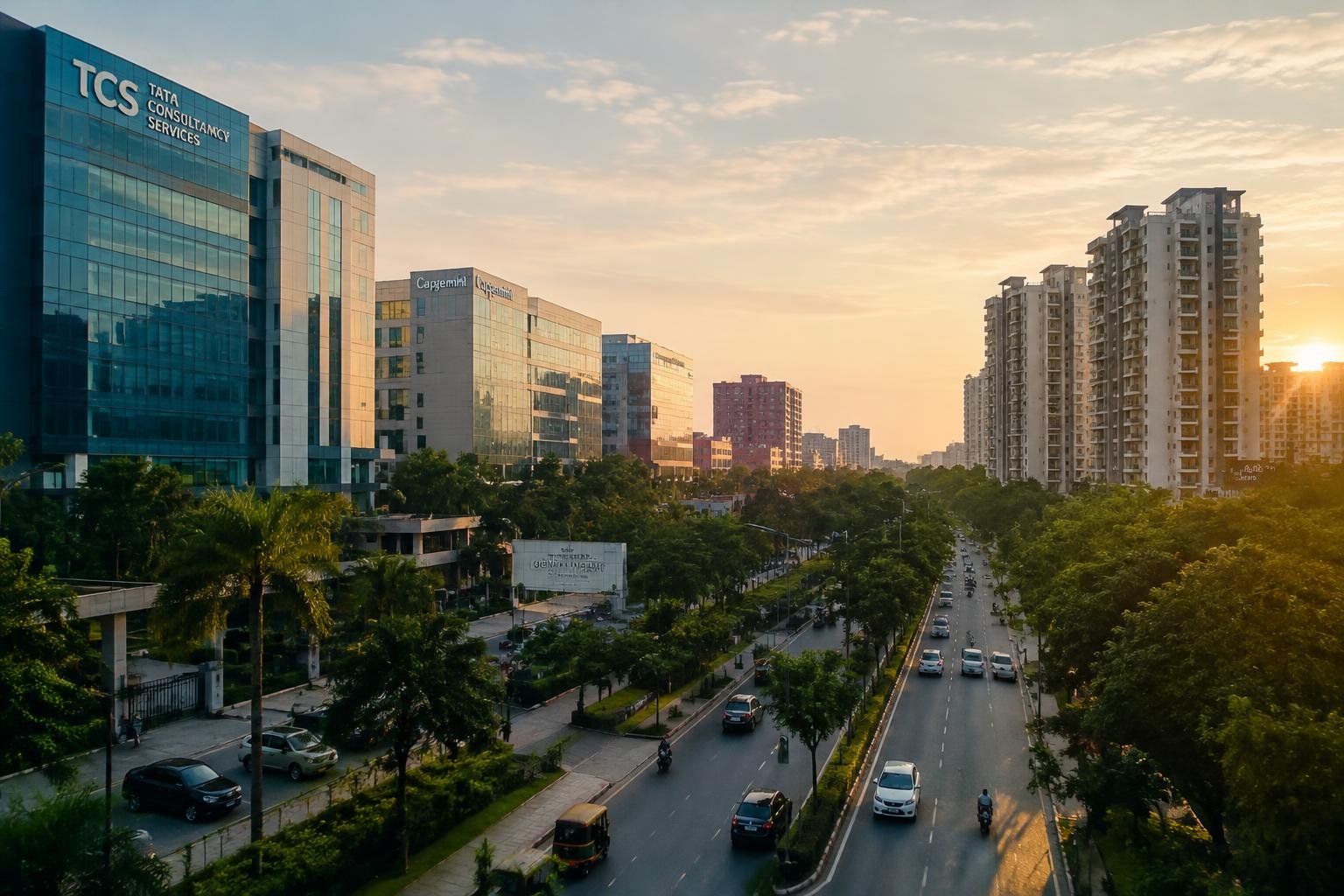
Gomti Nagar gives you a clear view of Lucknow’s modern urban growth, bringing offices, IT workplaces, housing, and everyday services into one major district. Located in Uttar Pradesh, it serves residents, employees, and visitors moving between business destinations and established residential areas. The 226010 postal code identifies a part of Gomti Nagar in eastern Lucknow.
Understanding Gomti Nagar’s Role in Lucknow
Gomti Nagar gives you a clear view of Lucknow’s shift toward planned urban growth, with offices, technology firms, public institutions, and established housing all contributing to its role. Its scale connects employment and daily life across a broad part of the city, rather than concentrating activity in a single commercial core. As you look at how the district functions, its mix of workplaces and neighborhoods explains why it serves residents, businesses, and government organizations alike.
Key areas and neighborhood types
Within Gomti Nagar, you encounter distinct pockets shaped by their dominant uses. Vibhuti Khand is recognized for corporate offices, hotels, and commercial activity, while Gomti Nagar Extension includes expanding residential communities and newer developments. Areas around Janeshwar Mishra Park combine housing with recreation, and nearby institutional sites add public and administrative functions. These neighborhood types give you a district that ranges from busy office clusters to quieter residential streets, with each pocket contributing a different part of local life.
How commercial, IT, and residential zones fit together
Gomti Nagar’s office and IT clusters bring daily employment close to housing, while shopping, dining, and services occupy commercial corridors between residential sectors. You see this arrangement around Vibhuti Khand, where technology and corporate workplaces sit near hotels and retail destinations, alongside established homes across the wider district. The result is a mixed-use pattern: employees, residents, and visitors share transport routes and public spaces, while workplaces remain concentrated in identifiable business pockets.
Choosing an Area to Live or Work
Start with how you expect to use Gomti Nagar each day, since a suitable address for a household may not suit a client-facing office or a hybrid worker. Your routine, privacy needs, preferred pace, and access to colleagues or services all shape the fit. Residential pockets, commercial centers, and mixed-use areas offer different settings, so define whether you prioritize a quieter home base, a visible business address, or a location that supports both.
Factors to consider: connectivity, amenities, and budget
For a home or workplace, weigh travel routes against the services you use most and the costs you can sustain. A location near a major road or public transport can simplify commutes, while nearby schools, clinics, shops, or restaurants matter differently by household and business type. Rent and purchase costs also vary by property, building, and precise location. A family may prioritize school access, while a consultancy may value client access and suitable office space.
Pros and cons of different neighborhood types
Residential neighborhoods generally offer a calmer setting and convenient daily services, though they may provide fewer storefronts or business facilities. Commercial areas give businesses visibility and access to offices, but activity, traffic, and limited housing choices can affect everyday comfort. Mixed-use pockets bring homes, workplaces, and shops closer together, which suits people who value short local trips; however, activity levels and parking conditions can differ from one block to another.
- Identify your usual start and end times.
- Decide whether client visits are part of your routine.
- Set a preferred level of street activity.
Step-by-Step Guide to Exploring Gomti Nagar
Start with a clear purpose for each visit, then assess the district in manageable stages rather than relying on a single drive-through. Mark the offices, housing options, shops, and public facilities relevant to your plans on a map, and group nearby stops together. Walk around each candidate location at the time you expect to use it, noting entrances, street activity, and the distance between destinations. Record observations by locality so details remain easy to verify later.
Plan a visit around work, housing, and daily needs
Choose a weekday visit if you need to understand office routines, and include an evening or weekend stop to see how residential streets function outside business hours. For work, inspect the building entrance, visitor access, and nearby places for lunch. For housing, walk from the property to a grocery shop, pharmacy, and other regular destinations. Keep a simple route log with locality names, such as Vibhuti Khand or Gomti Nagar Extension, and note the time taken on foot.
Check access, services, and local conditions
At each shortlisted address, follow the route from the nearest main road to the actual entrance, checking footpaths, crossings, parking arrangements, and signs. Look for practical services such as an ATM, clinic, grocery store, and waste collection point, then note their opening hours where displayed. Visit shared spaces and building approaches during busy periods to observe noise, lighting, and pedestrian movement. Record the exact street or block, since conditions can differ between nearby lanes.
Connectivity, Infrastructure, and Everyday Amenities
Gomti Nagar’s transport network and public facilities shape how you manage workdays, school runs, appointments, and time off. Your routine may involve a commute between residential sectors and office areas, a hospital visit, or an evening outing, so the location of roads, transit stops, and essential services matters in practical terms. Local infrastructure supports these daily journeys, with distinct facilities serving commercial hubs, residential neighborhoods, and destinations across Lucknow.
Roads, public transport, and access to key destinations
Wide arterial roads connect Gomti Nagar’s sectors with Hazratganj, Indira Nagar, and other parts of Lucknow, while the Shaheed Path provides a route toward the airport and southern areas. You can use city buses and auto-rickshaws for local trips, with the Gomti Nagar railway station serving regional rail journeys. Traffic varies around office clusters and peak commuting periods, particularly on routes near the main commercial corridors.
Healthcare, education, shopping, and recreation
Residents have access to hospitals and clinics, schools, and higher-education institutions within Gomti Nagar and nearby neighborhoods. Shopping options range from neighborhood markets to larger centres such as Vibhuti Khand’s malls, while Janeshwar Mishra Park offers open space for walking and outdoor recreation. Your everyday errands may include picking up groceries in a local market, attending a medical appointment, or visiting a school along a sector road.
- Sector parks provide smaller green spaces within residential areas.
- Local markets serve routine household shopping.
- Bank branches and ATMs are distributed across commercial and residential pockets.
Practical Tips for Residents, Businesses, and Visitors
For everyday plans, treat Gomti Nagar as a collection of distinct sectors rather than a single destination. Pin the exact building or entrance before setting out, since a large complex can have several access points, and keep the sector name handy for ride-hailing pickups or deliveries. Residents can note nearby pharmacies and grocery shops, while visitors should save their hotel’s location offline in case mobile data is unreliable indoors.
Tips for evaluating properties and business locations
Before choosing a flat, office, or retail unit, visit the property at different times and inspect the approach road, parking, lifts, water supply, and backup power. Ask the landlord or broker for the sanctioned use, maintenance charges, lease terms, and responsibility for repairs in writing. For a customer-facing business, observe pedestrian access and nearby parking at opening and closing hours; for an office, confirm building access rules and space for staff and deliveries.
Tips for commuting and accessing local services
Map your daily route from the specific sector, not just “Gomti Nagar,” because travel time depends on the destination and time of day. Keep a backup option such as an auto-rickshaw or app-based cab if your usual ride is unavailable, and allow extra time when crossing busy junctions. For public transport, confirm the nearest stop and service details before leaving. Save local emergency contacts and the addresses of your preferred clinic and pharmacy.
- Carry a reusable water bottle during outdoor errands.
- Share your building’s gate or tower name with delivery staff.
- Keep a phone charger or power bank for long appointments.
To wrap up
Gomti Nagar brings together Lucknow’s modern business activity, IT workplaces, and residential neighborhoods in one major district. As you assess 226010, look beyond the postal address to the specific sector, commute route, nearby services, and type of property that fit your plans. You will find that daily life differs between office-focused areas and quieter residential pockets, while local roads and amenities shape access across the district. For work, housing, or a visit, the exact location within Gomti Nagar matters.