
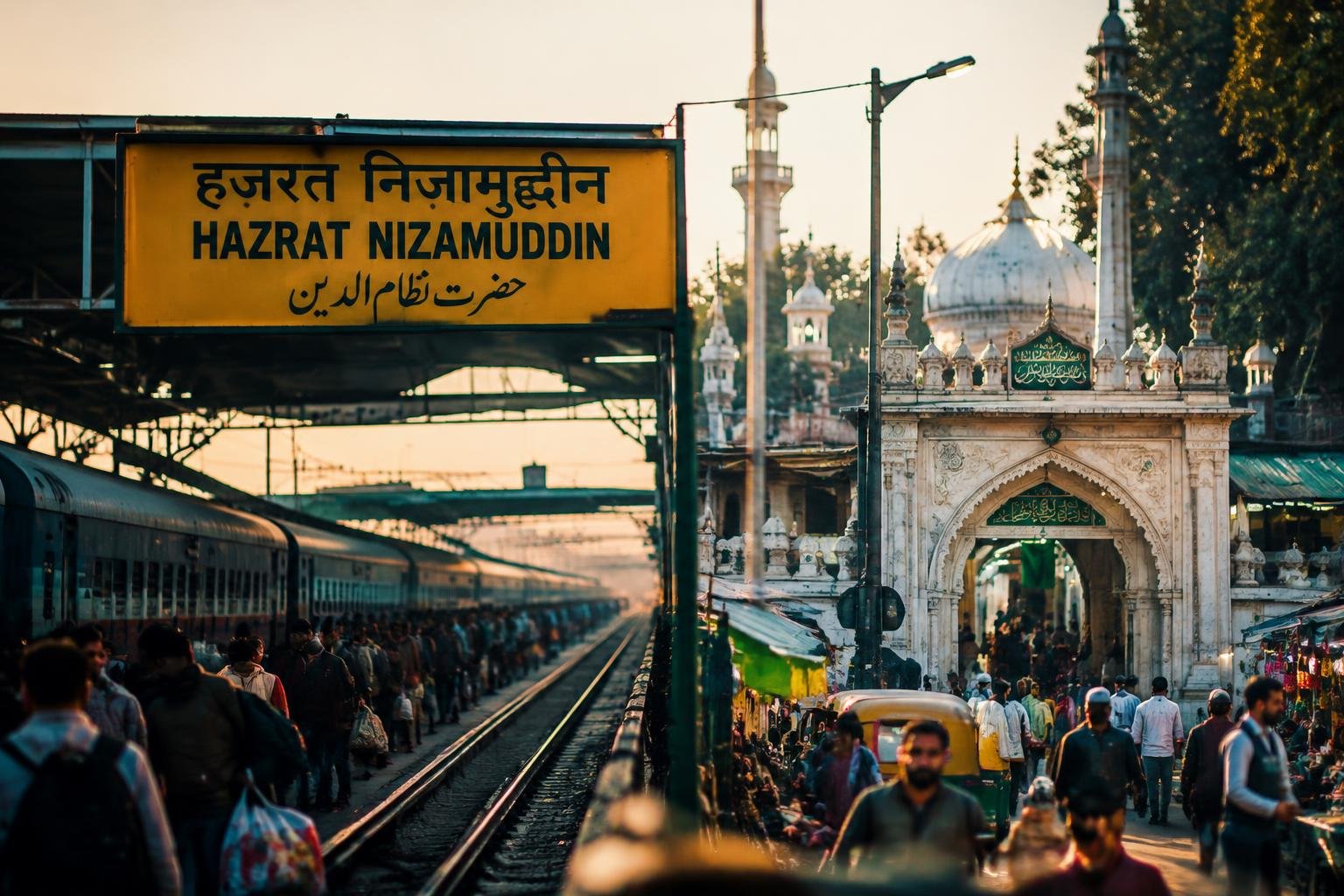
Hazrat Nizamuddin brings together a major railway station, the revered dargah of Sufi saint Nizamuddin Auliya, and a historic neighborhood in southeastern Delhi. As you arrive, you encounter a busy transport hub alongside narrow lanes leading to the shrine and nearby monuments. The area’s postal code, 110013, identifies a place shaped by pilgrimage, rail travel, and centuries of Delhi history.
Understanding Hazrat Nizamuddin
Hazrat Nizamuddin brings together an active railway hub, a major Sufi shrine, and an older urban district within the same part of south-central Delhi. You encounter these as connected places, but each has its own purpose and character: trains link the area to cities across India, the dargah draws devotees and visitors, and surrounding streets reflect generations of neighborhood life. Their close association gives the locality a distinct identity within Delhi.
The station, shrine, and neighborhood
At Hazrat Nizamuddin railway station, you arrive at a transport center named for the revered Sufi saint whose dargah lies in the nearby neighborhood. The station serves as a modern gateway, while the shrine remains a place of worship and pilgrimage, set among lanes with shops, homes, and food vendors. As you move between these settings, you see how a major rail connection and a living religious quarter share a name without being the same site.
Historical and cultural significance
Hazrat Nizamuddin’s identity is rooted in the legacy of the 14th-century Chishti Sufi saint Nizamuddin Auliya, whose shrine continues to attract worshippers across religious communities. Around the dargah, devotional practices such as qawwali have carried forward a distinctive tradition of spiritual music and gathering. You also encounter layers of Delhi’s history in nearby monuments and older streets, where the shrine’s enduring presence connects local daily life with a wider cultural heritage.
Types of Visits and Getting Around
You can approach Hazrat Nizamuddin as a rail passenger, a visitor to the dargah, or a walker tracing the neighborhood’s historic sites. These experiences often overlap, but each uses a different route through the area: station connections serve onward travel, while the shrine lanes and nearby monuments reward moving on foot. Your choice of transport shapes how you reach the landmarks, from an auto-rickshaw ride to a short walk through the surrounding streets.
Railway journeys and local transport
Arriving at Hazrat Nizamuddin railway station puts you near the neighborhood, though the station’s entrances and platforms are separate from the shrine’s lanes. From the station, you can use an auto-rickshaw, taxi, or app-based cab to reach the dargah area; local buses serve broader routes, while walking is practical for nearby destinations when your route is clear. Metro connections require a transfer by road, so identify your exit and pickup point before leaving the station grounds.
Shrine visits and heritage walks
Inside the dargah quarter, narrow lanes make walking the most direct way to reach the shrine and nearby historic buildings. You can combine the dargah with a walk toward Humayun’s Tomb or the Nizamuddin Basti heritage precinct, using local signs and landmarks to orient yourself. Traffic and pedestrian movement share parts of the approach, so vehicles generally do not provide door-to-door access to the shrine. The lanes open into a dense network of shops, entrances, and courtyards.
- Keep the station ticket accessible for platform checks.
- Set a visible meeting point outside crowded entrances.
- Carry a charged phone for cab pickup coordination.
Step-by-Step Visit Planning
Build your itinerary around the places you intend to visit, then check how each stop fits with your arrival point and available time. Mark the railway station, the shrine, and any historic sites on a map before leaving, and allow room for walking between them. A short route plan gives you a clear order for the day, while keeping travel between Hazrat Nizamuddin and nearby destinations manageable.
Choosing a route and setting aside time
Start by identifying your first stop, such as Hazrat Nizamuddin railway station or the shrine, and map the remaining locations from there. Use a digital map to estimate walking and road travel, then leave extra time for traffic, queues, and finding the correct entrance. If you are visiting several places, group nearby stops together rather than crossing the area repeatedly. Keep your route flexible enough to accommodate a longer-than-expected visit at the shrine.
Planning around transport, opening times, and events
Check your train arrival and departure details before choosing local transport, especially if your schedule depends on a connection at Hazrat Nizamuddin station. Confirm current visiting hours directly with each destination, since access times can differ by site and day. Look for scheduled events that could affect traffic or availability, and arrange a taxi, auto-rickshaw, or walking leg accordingly. Save key addresses and your return train platform information on your phone before setting out.
Tips for a Respectful and Smooth Visit
Plan your movements around the railway station, shrine lanes, and local traffic rather than treating the area as a single open plaza. Keep your belongings close, follow posted instructions, and give residents room to pass through narrow streets. Before setting out, save the address of your destination and agree on a meeting point with anyone accompanying you, since crowds can make mobile calls difficult. Small courtesies, such as stepping aside before checking a map, reduce congestion.
Shrine etiquette and appropriate clothing
At the dargah, dress modestly by covering your shoulders and knees, and carry a scarf to cover your head if requested at the entrance or by shrine staff. Remove your shoes where indicated, keep your voice low, and avoid blocking worshippers or the movement of people offering prayers. Ask before photographing people, and follow guidance from attendants about offerings and access to particular spaces. Keep footwear together in the designated shoe area.
Crowds, accessibility, and personal safety
Expect tight pedestrian lanes around the shrine, especially during prayer times and qawwali gatherings. Use sturdy, closed-toe shoes, and allow extra time if you rely on a wheelchair, walking aid, or assistance, since uneven paving and steps can restrict access. Keep cash and your phone secure in a zipped pocket, and agree on a visible meeting point before entering a crowded lane. For onward travel, confirm your pickup location away from the busiest entrance.
- Carry a refillable water bottle.
- Keep a small amount of cash for local purchases.
- Save your driver’s contact details before arrival.
Factors, Pros, and Cons
Your experience around Hazrat Nizamuddin depends on whether you are arriving by train, visiting the dargah, or moving through the surrounding streets. The area’s strongest advantages are its access to rail services and its concentration of historic and religious landmarks. At the same time, busy roads, dense foot traffic, and the contrast between station facilities and neighborhood lanes shape how easily you can move between these destinations.
Cultural depth, historic character, and connectivity
From Hazrat Nizamuddin railway station, you have access to long-distance rail connections, while the nearby dargah and historic monuments give the area a distinct cultural character. The shrine’s devotional setting offers a different experience from the station’s transit environment, and Humayun’s Tomb lies within the broader neighborhood. You can combine rail travel with visits to these sites, though each stop has its own access route and pace.
Crowd levels, congestion, and practical limitations
During prayer gatherings, shrine visits, and busy train periods, you may encounter crowded lanes and slower vehicle movement around the station and dargah. Narrow streets can make taxis difficult to use close to the shrine, while station entrances and platforms require extra time with luggage. Food stalls and local shops add convenience, but the area’s dense activity can make quiet pauses or quick transfers harder during peak periods.
- Station and shrine entrances are separate destinations.
- Platform access involves stairs and footbridges.
- Street parking is limited near the dargah.
Final Words
Hazrat Nizamuddin brings together the daily movement of a major railway station, the devotional life of the dargah of Sufi saint Nizamuddin Auliya, and the layered history of its surrounding neighborhood. As you plan a visit, allow time for the station’s crowds and the distinct customs of the shrine, including modest dress and respectful conduct. Nearby historic sites add another dimension to your route, making this Delhi area a place where rail travel, worship, and heritage meet within a short distance.