Bhopal anchors Madhya Pradesh as its political and administrative center, with the 462001 Bhopal GPO postcode serving one of the city’s most connected postal hubs. You rely on this central node for consistent mail delivery across government, commercial, and residential networks. Located near key institutions and transport links, the GPO ensures your correspondence moves efficiently through one of central India’s longest-standing urban cores.
Key Takeaways:
- Bhopal, the capital of Madhya Pradesh, hosts the 462001 postal code for its General Post Office (GPO), a central hub that supports communication infrastructure across the city and surrounding regions.
- The GPO in Bhopal operates as a key administrative node within India’s postal network, handling high-volume mail processing and serving as a reference point for official correspondence in government and public services.
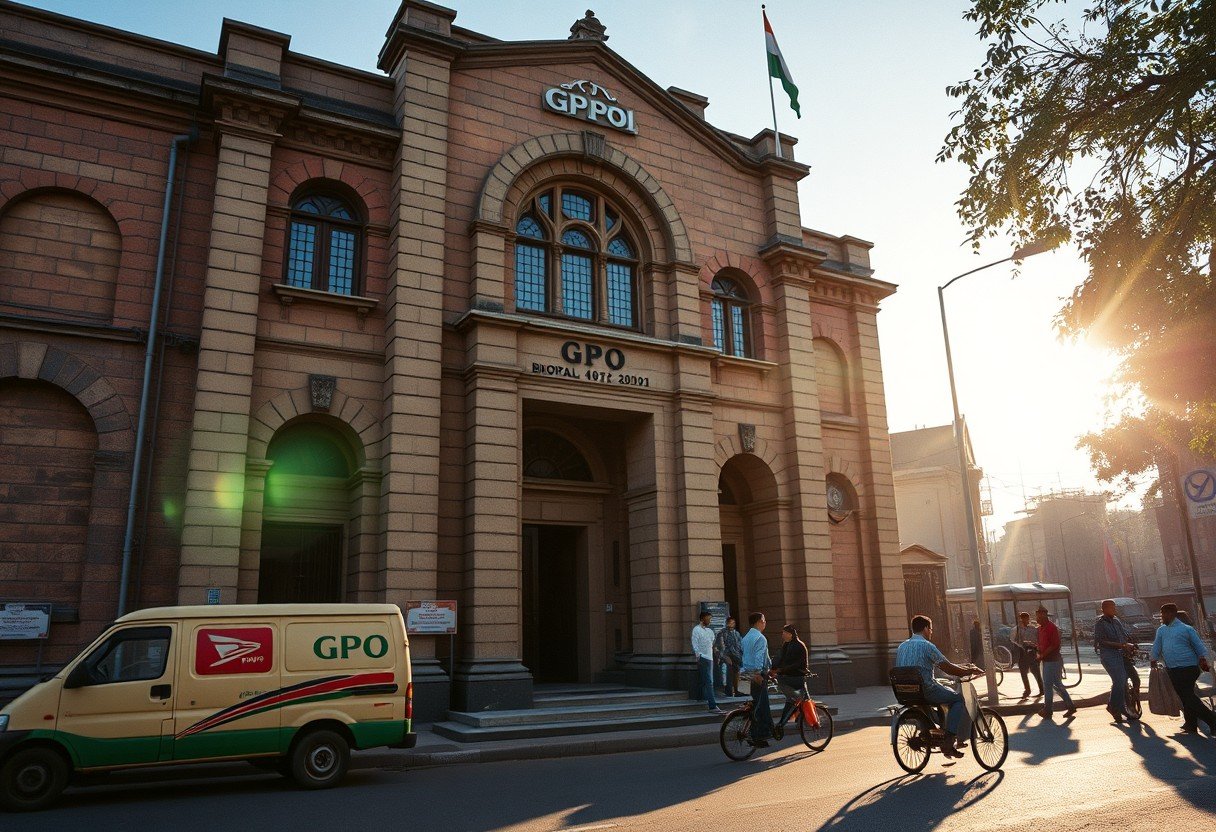
- Located in the heart of the city, the Bhopal GPO building reflects colonial-era architecture and continues to function as both a working post office and a landmark tied to the city’s administrative evolution since the 19th century.
The Heart of the City
Bhopal’s core beats strongest around its central institutions, where daily life unfolds in layered rhythms. You move through a zone shaped by administration, commerce, and community, anchored by one of the city’s oldest functional hubs. This is not a tourist facade but a working nucleus, where residents collect pensions, send documents, and queue for stamps. The 462001 pin code covers more than a post office-it defines a dense urban microclimate of errands, exchanges, and civic routine.
The GPO as a Landmark
The Bhopal GPO stands as a colonial-era structure with arched windows and a clock tower that still keeps time. You recognize it by the steady flow of couriers, government staff, and individuals carrying sealed envelopes marked ‘urgent’. Its location near the railway station and main bus depot ensures constant foot traffic. The building, though not grand by national standards, functions as a trusted node in the city’s communication network.
The Pulse of 462001
Within the 462001 zone, activity peaks between 10 a.m. and 4 p.m., when government offices are open and deliveries arrive. You notice clusters of people outside photocopy shops, mobile recharge stalls, and tea vendors near the GPO. This pin code covers a mix of administrative blocks, small legal firms, and educational institutes relying on postal services. The volume of registered mail here exceeds that of many suburban zones in the city.
A mid-sized SaaS firm operating from a co-working space in Arera Colony recently shifted its billing address to 462001 to align with official correspondence norms. You see similar patterns across sectors-legal notices dispatched from court complexes, exam forms submitted by coaching centers, and pension applications routed through municipal offices. The postal flow reflects Bhopal’s dual identity: a modernizing capital with deep reliance on established systems. Even as digital platforms grow, physical mail remains embedded in verification, compliance, and record-keeping processes across this zone.
A Capital Heritage
Bhopal, the capital of Madhya Pradesh, carries a layered legacy shaped by centuries of cultural synthesis and political transformation, visible in its institutions, language, and urban fabric. Once the seat of the Nawabs of Bhopal, the city blends Islamic and colonial influences with modern governance, a history you can explore further at Bhopal.
Postmarks and History
Postal markings from 462001 Bhopal GPO often bear traces of the city’s administrative evolution, reflecting changes in governance and communication patterns since the late 19th century. These postmarks serve as quiet records of a city that transitioned from princely state to modern capital.
The Architecture of Communication
Bhopal’s General Post Office stands as a functional landmark, its colonnaded façade and central location underscoring the role of mail in connecting a growing state capital. Built during the early decades of Indian independence, its design balances civic dignity with practical access.
Constructed with load-bearing brick and wide verandas suited to the central Indian climate, the GPO’s layout follows a radial workflow that prioritizes sorting efficiency and public queues. Natural light filters through high windows into the main hall, reducing reliance on artificial lighting during peak hours, a subtle but enduring feature of its original design.
Life in the State Capital
Bhopal blends administrative function with cultural rhythm, where government offices operate alongside bustling markets and quiet residential lanes. You experience this duality daily, moving between structured routines and the spontaneous energy of street life. Green spaces like Upper Lake frame the cityscape, offering morning walkers and families a reprieve within the urban flow.
Streets of Bhopal
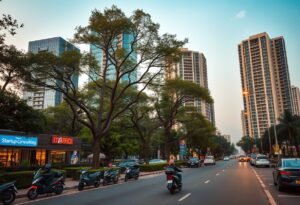
Narrow lanes widen into tree-lined avenues near the GPO, where cycle rickshaws weave between delivery scooters. You pass vendors selling chai near newspaper stands, each corner marked by hand-painted signage in Devanagari and English. Traffic slows at crosswalks near Habibganj, where commuters stream toward the railway station.
The People of the GPO
Clerks, postal workers, and local businessmen form the core of daily activity around the GPO. You recognize familiar faces at the counter, from the senior postmaster who sorts registered mail to the courier agent waiting by the loading bay. Their routines shape the rhythm of the block, repeating with quiet consistency.
Each morning, postal staff process parcels bound for villages across Malwa and Nimar, while students line up to send exam forms to Ujjain and Indore. You observe how handwritten addresses still dominate, many inked on recycled cardboard, reflecting a system that runs as much on trust as on procedure. A retired schoolteacher collects her pension order every Wednesday, a habit unchanged for seventeen years.
Summing up
You are in Bhopal, where 462001 designates the General Post Office at the city’s core, a functional landmark in Madhya Pradesh’s capital. This postal code connects you to a working hub amid a city that blends administrative purpose with cultural continuity, serving residents, businesses, and institutions across central India.