
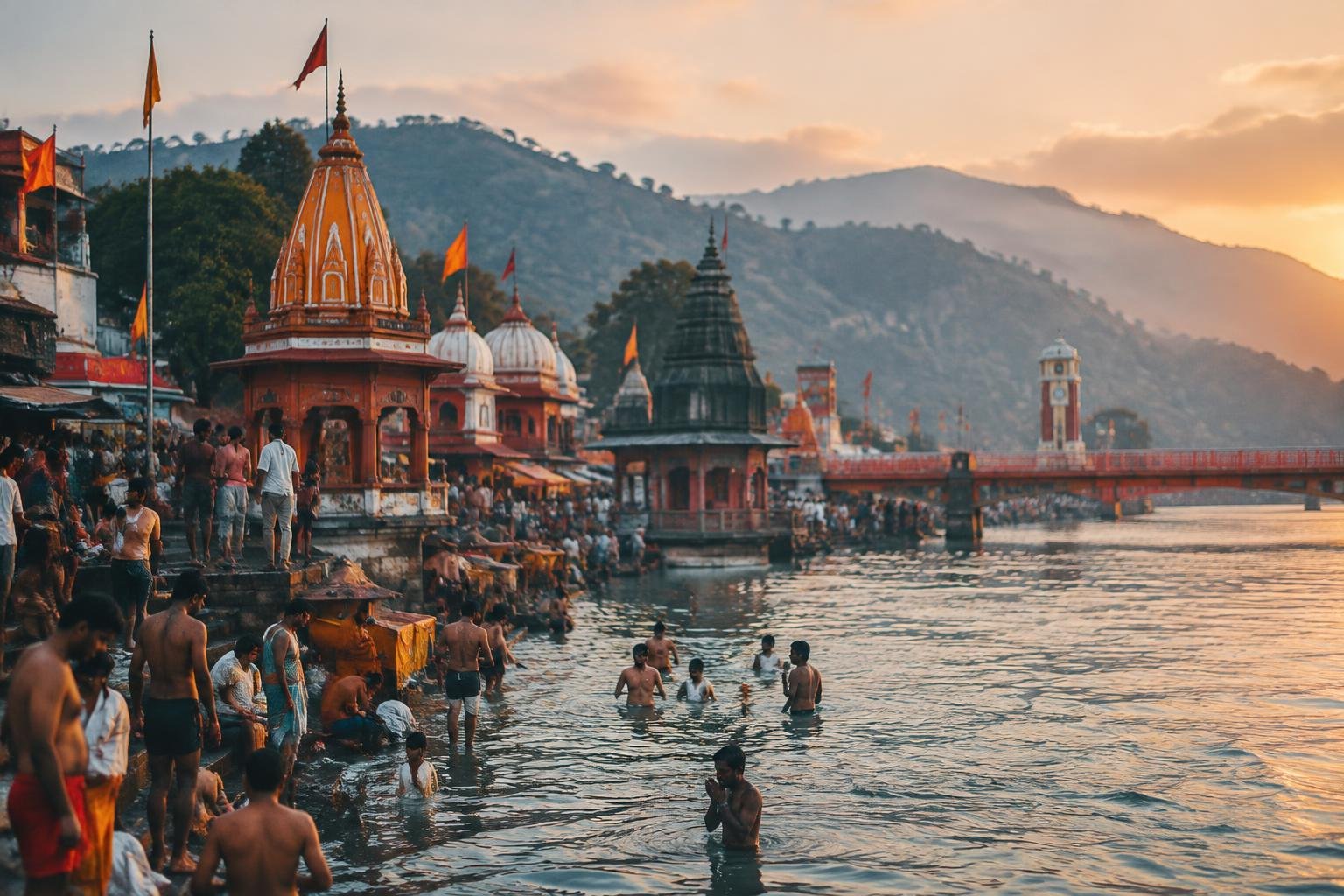
At Haridwar, the Ganges leaves the Himalayan foothills and flows into the plains, giving the city a central place in Hindu pilgrimage. You encounter worship at Har Ki Pauri, where devotees gather for evening Ganga Aarti, and a major Kumbh Mela destination shaped by sacred river bathing and long-standing ritual traditions.
Types of Pilgrimage Experiences in Haridwar
Your experience in Haridwar can center on personal devotion, shared cultural traditions, or the collective energy of a major religious gathering. A quiet visit to a shrine offers a different rhythm from witnessing evening worship at the Ganges or joining pilgrims during a festival. These forms of travel often overlap, but each brings its own focus, from private prayer and ritual observance to music, processions, and public worship along the river.
Temple, Ghat, and Ashram Visits
At Har Ki Pauri, you can observe or join the Ganga aarti, as priests offer lamps and chants beside the river. Temple visits bring attention to specific forms of worship, while an ashram stay may include meditation, scripture study, or a simple daily prayer routine. Your visit can be contemplative or communal, depending on the setting and your participation. Along the ghats, devotees often offer flowers and light small leaf boats carrying oil lamps.
Kumbh Mela and Other Religious Gatherings
During Kumbh Mela, you encounter pilgrimage on a vast communal scale, with processions of ascetics, public worship, and ritual bathing at the Ganges forming central parts of the gathering. Other religious occasions, including Kanwar Yatra, draw devotees who travel to collect sacred water and carry it to Shiva temples. These events give you a view of living traditions shaped by collective vows, devotional songs, and shared ceremonies rather than the quieter pace of an individual temple visit.
Step-by-Step Guide to Planning Your Visit
Start by setting a travel window, then match your route and stay to the number of days available. Check rail and road connections to Haridwar Junction or the bus station before booking, since arrival time affects how you arrange onward transport. Keep your itinerary flexible enough for delays, particularly during major religious gatherings, and save booking details offline so you can access them if mobile service is unreliable.
Choosing the Best Time and Duration
Choose dates according to your comfort with crowds, weather, and travel conditions. Cooler months generally suit walking between appointments, while summer heat calls for an earlier start and a lighter schedule. If your dates overlap with a major bathing festival, book transport and lodging well ahead and allow extra time for access restrictions. A short visit needs at least one full day on the ground; a longer stay gives you room to adjust around queues and local traffic.
Preparing for Travel, Accommodation, and Local Transport
Book your train or bus ticket first, then select accommodation near the station, bus stand, or your planned daily route. Confirm check-in hours and the property’s address, since late arrivals and narrow access roads can complicate transfers. From the railway station, use an auto-rickshaw, taxi, or app-based cab where available; during congestion, local authorities may direct vehicles to designated drop-off points. Keep small cash, a charged phone, and your lodging details accessible.
- Download an offline map of Haridwar before departure.
- Save your accommodation’s phone number and landmark.
- Carry a power bank for long travel days.
- Keep a photo ID ready for check-in.
Major Pilgrimage Sites and Sacred Traditions
Across Haridwar, sacred geography links river ghats, temples, and ashrams with traditions of worship and pilgrimage. As you move between these places, you encounter practices shaped by the Ganga, including prayer, offerings, and ritual bathing. The city’s pilgrimage character is especially visible along the riverfront, where longstanding shrines stand near gathering points used for ceremonies. Each site carries its own religious associations, from the evening lamps at Har Ki Pauri to temple routes leading toward the surrounding hills.
Har Ki Pauri and the Ganga Aarti
At Har Ki Pauri, you stand beside one of Haridwar’s most revered stretches of the Ganga, associated with the footprint of Lord Vishnu in local tradition. At dusk, priests lead the Ganga Aarti with brass lamps, bells, chants, and offerings of light directed toward the river. Pilgrims gather along the steps and nearby bridges to witness the ceremony, while floating leaf bowls carrying flowers and small flames mark individual acts of devotion.
Temples, Ashrams, and Sacred Routes
Beyond the riverfront, you encounter temples dedicated to deities including Mansa Devi and Chandi Devi, whose hilltop shrines are connected to Haridwar by established pilgrimage routes. Ashrams along the Ganga provide settings for prayer, scripture study, and meditation, reflecting the city’s continuing role as a centre of religious learning. The paths to the hill temples, including the routes reached by ropeway and on foot, connect distinct places of worship with views across the Ganga plain.
Tips for a Safe and Respectful Pilgrimage
Haridwar’s sacred spaces are shared by worshippers, residents, and visitors, so your conduct affects more than your own visit. Follow instructions from temple staff, police, and volunteers, especially during busy bathing periods, and keep pathways clear for people moving between shrines and the river. Dress modestly at places of worship, ask before photographing ceremonies or individuals, and give priority to older pilgrims and those who need assistance.
Ghat Etiquette and Environmental Care
At Har Ki Pauri and other ghats, enter the Ganga only at permitted bathing points and use handrails where provided; currents and wet stone steps can be hazardous. Keep soap, shampoo, food wrappers, and offerings containing plastic out of the river, and place waste in designated bins. Follow posted rules on footwear and photography, and avoid blocking steps during prayers. Leave flowers and other offerings only at marked collection points.
Health, Security, and Crowd Awareness
Carry drinking water in a reusable bottle, use hand sanitizer before eating, and seek assistance from a first-aid post if heat, fatigue, or illness affects you. Keep your phone and valuables secured in crowded lanes, and agree on a meeting point with companions in case you become separated. During heavy foot traffic, move with the crowd rather than pushing across it; follow police barriers and volunteer directions near the ghats.
- Wear sandals with a firm, non-slip sole.
- Keep medicines in their labeled packaging.
- Use a waterproof pouch for essential documents.
- Do not leave bags unattended beside the river.
Factors to Weigh: Pros and Cons of Visiting
Your experience depends on the balance between Haridwar’s devotional atmosphere and the practical demands of a busy pilgrimage city. A visit can bring meaningful contact with Hindu customs, river worship, and a steady rhythm of prayer, while crowded streets and peak-season pressure can limit flexibility. The character of your stay also varies with the calendar: an ordinary weekday and a major bathing occasion present very different conditions around the Ganges.
Benefits of Visiting a Major Hindu Pilgrimage Centre
For you, Haridwar offers living traditions rather than a purely historical setting. At Har Ki Pauri, evening Ganga aarti brings together priests, lamps, chants, and worshippers beside the river, while temples and dharamshalas reflect the city’s continuing role as a place of pilgrimage. Shared rituals can make the customs easier to understand, whether you take part in a prayer ceremony or observe respectfully from the ghat steps.
Challenges, Accessibility, and Peak-Season Crowds
During holidays and popular bathing periods, you should expect dense foot traffic near Har Ki Pauri, slower journeys through central Haridwar, and limited quiet space along the ghats. Narrow lanes, uneven steps, and riverfront congestion can be difficult if you have mobility needs or are travelling with young children. Rail and road links serve the city, but the final approach to crowded areas may involve walking, diversions, or waiting for local transport.
- Carry footwear that is easy to remove at temple entrances.
- Keep a small amount of cash for local purchases and offerings.
- Choose a clear meeting point if your group becomes separated.
Kumbh Mela: What to Know Before You Go
During Kumbh Mela, Haridwar’s usual pilgrimage patterns expand into a large, temporary gathering shaped by bathing dates and public arrangements. You will encounter designated routes, controlled entry points, and service areas alongside the city’s permanent streets and facilities. Travel plans need to account for these event-specific changes, particularly around Har Ki Pauri and the railway station, where movement can be restricted or redirected during peak periods.
Timing, Rituals, and Pilgrim Facilities
Bathing dates, known as shahi snan days, draw especially large pilgrim gatherings, so your arrival time affects access to the ghats and transport. Authorities publish schedules and route notices as arrangements are finalized; follow current instructions rather than relying on an old itinerary. Temporary camps, drinking-water points, toilets, medical posts, and information desks serve visitors across designated areas, while facilities and access routes vary by location and event phase.
Crowd Management and Travel Precautions
For safer movement, use the entry and exit routes assigned by police and event staff, and avoid stopping in narrow passages or at barricades. Keep your group’s meeting point specific, such as a named sector gate, because mobile service can become unreliable in dense crowds. Carry identification, essential medication, and a small amount of drinking water; follow rail and bus advisories, since services and road access can change during major bathing days.
- Save the official event helpline number before arrival.
- Mark your camp sector on an offline map.
- Wear footwear that is easy to remove at bathing areas.
- Keep children’s contact details in a visible pocket.
Conclusion
Haridwar, Uttarakhand, brings together daily Hindu worship and the scale of the Kumbh Mela, with the Ganga ghats serving as the centre of many pilgrimage routines. You can attend the evening Ganga Aarti at Har Ki Pauri, visit temples, and take part in customary bathing with respect for local guidance and river conditions. During Kumbh, crowds and movement patterns change substantially, so your plans should account for event arrangements as well as the city’s sacred sites.