Pilgrimage to Ayodhya, located in the heart of Uttar Pradesh with the postal code 224001, places you at the epicenter of one of Hinduism’s most venerated cities, where ancient devotion converges with rapid infrastructural transformation. You walk the same banks of the Sarayu River that saints and seekers have revered for centuries, now framed by newly developed ghats, expanded temple complexes, and a growing network of visitor facilities designed to accommodate millions of annual pilgrims.
Key Takeaways:
- Ayodhya’s status as a major Hindu pilgrimage site has been reinforced by the construction of the Ram Mandir, drawing millions of visitors annually and transforming the city’s infrastructure and urban planning priorities.
- The city’s religious-tourism economy is expanding rapidly, with new hotels, transport links, and visitor facilities emerging, particularly along the Sarayu riverfront and near key shrines like Ram Janmabhoomi and Hanuman Garhi.
- Archaeological findings and centuries-old textual references continue to inform both public perception and development policies, anchoring Ayodhya’s modern identity in its mythological and historical narratives.
The Sacred Topography of the Sarayu
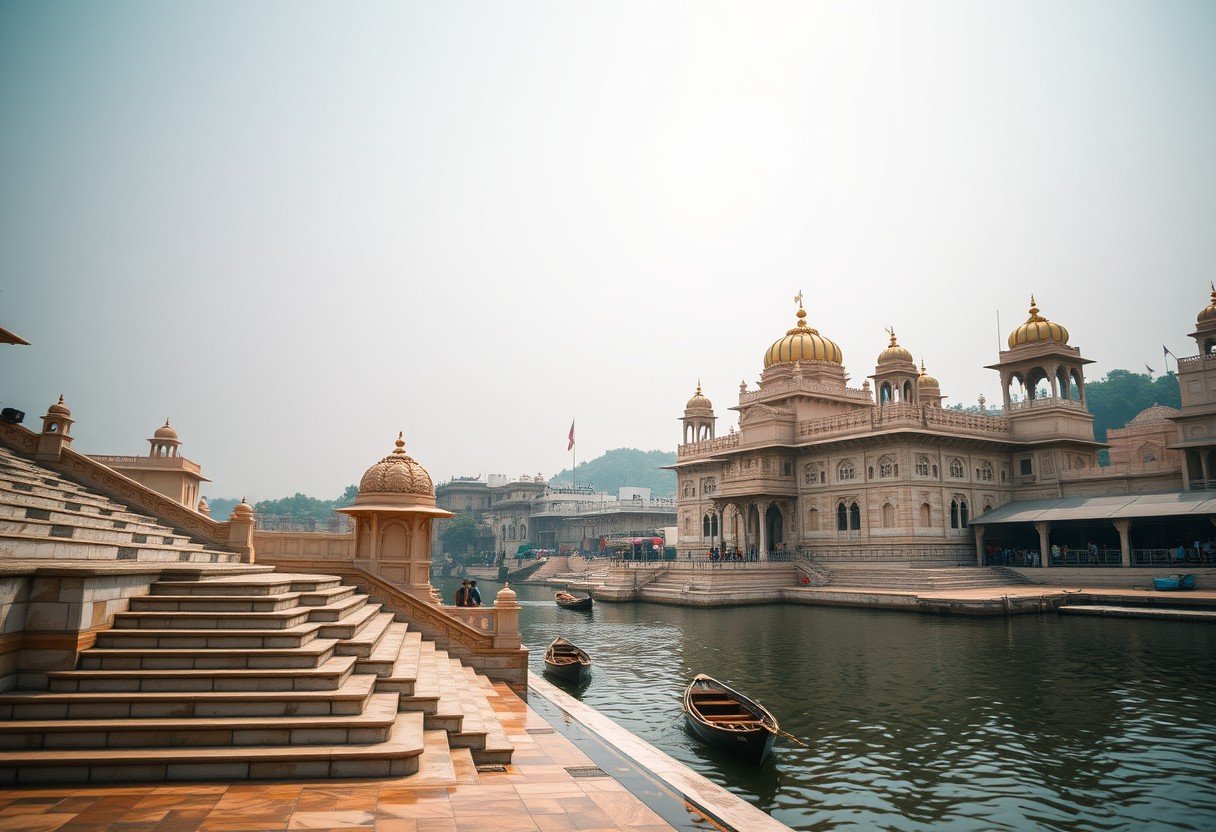
You walk along the banks of the Sarayu River where centuries of ritual converge in the present. Pilgrims descend stone ghats at sunrise, their offerings drifting with the current past ancient banyans and temple spires. Each bend in the river aligns with a legend from the Ramayana, embedding myth into the land’s contours. The water’s path frames sacred coordinates-Ram Janmabhoomi to the north, Mani Parvat to the south-forming a spiritual axis still navigated by faith today.
Architectural Resurgence of the Nagara Style
Traditional Nagara elements now define Ayodhya’s skyline, with upward-curving shikharas and intricately carved mandapas reappearing in new temple constructions. You see this revival most clearly in recent sanctuaries that adhere strictly to ancient Silpashastra guidelines while accommodating large congregations. Ayodhya is rapidly emerging as one of India’s most visually and spiritually cohesive religious centers, where form and faith align in stone and symmetry.
The Living Pulse of Ramkot
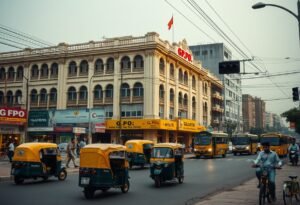
You walk through Ramkot and feel the city breathe around you, where morning aartis echo from makeshift shrines and vendors sell marigolds beside smartphone stalls. Pilgrims queue before dawn at Ram Janmabhoomi, their chants blending with construction hum from nearby overpasses. A rickshaw driver recites Sanskrit verses passed down through generations, while a new food court serves kachoris to tourists scrolling live temple webcams. This is not frozen heritage but living tradition, adapting without erasure, where every alley tells a story still being written.
Modernity Grafted onto Antiquity
You walk streets where ancient stone pathways now run parallel to fiber-optic lines, and temple bells chime above the hum of electric rickshaws. Pilgrims with prayer beads in hand consult digital kiosks for darshan timings, while solar panels blend into gabled rooftops of newly built guesthouses. Ayodhya’s spiritual core remains untouched, yet the city accommodates millions with modern drainage systems, multilevel parking, and a new railway terminal designed with traditional motifs. Even the lighting along the Sarayu embankment follows a carefully calibrated scheme that enhances nighttime rituals without disrupting the riverfront’s sanctity. This integration does not dilute tradition but allows it to function at scale, as seen in the real-time crowd management system during Ram Navami that relies on AI-powered surveillance and ground marshals in coordinated uniforms. The city’s evolution reflects a careful calibration where every new structure or service is vetted for cultural resonance, ensuring development serves devotion without overshadowing it.
The Economic Horizon of the Holy City
You see new hotels rising near the riverbanks, built to accommodate the growing number of pilgrims visiting Ayodhya each year. Local artisans report increased demand for religious souvenirs, with some small workshops doubling output since 2023. A mid-sized SaaS firm recently opened a support office in the city, drawn by tax incentives and improved digital infrastructure. Daily footfall at the main market has expanded, with vendors now selling everything from prayer items to regional textiles. Real estate values near temple corridors have climbed, reflecting investor confidence in sustained religious tourism. Bus routes have been extended, and a new parking complex serves thousands of vehicles weekly. You notice food stalls operating around the clock during festival seasons, many run by returning migrants who found better prospects at home than in distant cities. The city’s economy now balances devotion and development, with service sectors gaining momentum alongside traditional crafts and temple-related commerce.
Final Words
You stand at the threshold of a city where ancient devotion converges with modern ambition, and where the banks of the Sarayu echo centuries of ritual while cranes reshape the skyline. Ayodhya, designated 224001, is no longer just a pilgrimage endpoint but a living chronicle of cultural reinvention, drawing millions not only for darshan but as a symbol of India’s evolving religious urbanism.