Most visitors to Kolkata pass through BBD Bagh without realizing they’re walking on ground that once governed an empire. You stand where colonial statutes were drafted, fortunes made, and independence plotted, all within the shadow of the imposing General Post Office. This address, 700001, marks not just a postal zone but the historic nucleus of eastern India’s administration and finance.
Key Takeaways:
- The 700001 BBD Bagh postal code designates Kolkata General Post Office, one of India’s oldest continuously operating post offices, serving as a functional anchor in the city’s central business district since the late 19th century.
- BBD Bagh, formerly Dalhousie Square, remains a concentrated hub of colonial-era architecture and institutional memory, housing not only the GPO but also the offices of the Reserve Bank of India, the Calcutta High Court, and several legacy financial firms.
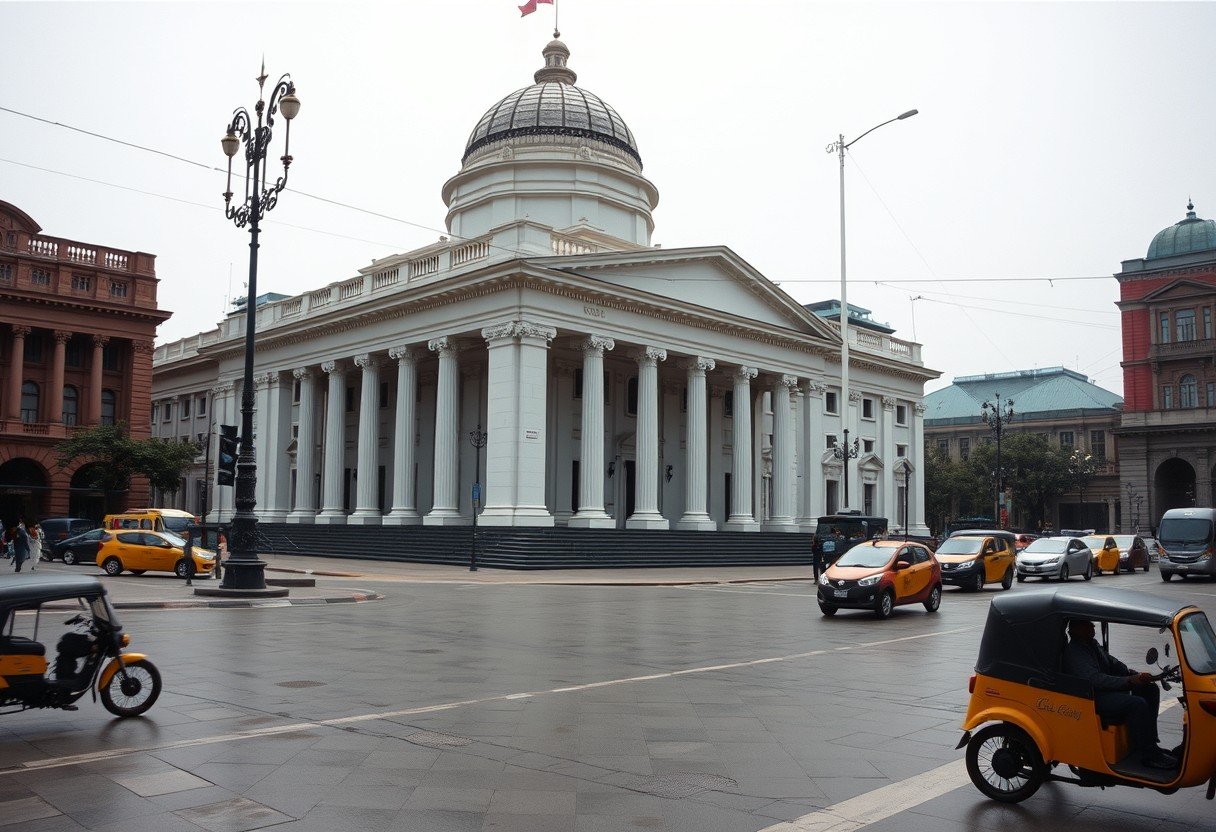
- The GPO building’s neoclassical dome and symmetrical façade reflect the architectural priorities of British imperial administration, with its central location underscoring the role of postal infrastructure in maintaining control over a vast colonial territory.
The Citadel of Seven Thousand and One
You stand within a structure known officially as 700001 BBD Bagh, a postal designation that doubles as a symbolic threshold. This is not merely a post office but a sovereign address governing thousands of others, its code anchoring the entire district’s communication network. The General Post Office here functions as a silent administrator, processing streams of correspondence that feed into Kolkata’s institutional memory. Its corridors, lined with brass fittings and colonial-era counters, still echo with the rhythm of clerks sorting letters by hand. A mid-sized SaaS firm in Salt Lake City may rely on digital servers, but this building remains a physical nexus where
The White Dome of the Postmaster
You stand beneath the White Dome of the Postmaster, where clerks once sorted mail for an empire, their ledgers stamped with the emblem of the General Post Office. This rotunda, modeled on St. Peter’s in Rome, rises 220 feet with a self-supporting brick shell, one of the largest in Asia. Sunlight filters through its oculus, illuminating decades of dust and silence. You hear the echo of steel nibs scratching registration slips, a system unchanged since 1868. The dome still houses active postal operations, its corridors lined with wooden pigeonholes, each labeled in fading ink. A single brass bell marks the hour, just as it did during the 1911 Delhi Durbar. You pass beneath iron grilles where telegrams were once handed through slots, their urgency measured in shillings and seconds. This is not a museum but a working relic, where time moves by postal circulars and shift logs. The dome’s acoustics carry whispers from the counter to the vault, a sound unchanged since Tagore collected his mail here. You notice the ceiling’s radial beams, painted to mimic marble, now cracked but still holding. The building operates on a 19th-century timetable, with lunch breaks at 1:30 and counters closing at 5:45 sharp. Even today, registered letters are signed for in bound volumes, their pages thick with colonial-era script. You see a clerk stamp a parcel with a date that matches the one on your own passport. The dome remains a living archive, where every envelope carries not just address but history.
Echoes of Dalhousie Square
You walk where imperial proclamations once echoed under colonial rule, past sandstone facades that housed the machinery of British administration. The symmetry of Dalhousie Square, now Binay Badal Dinesh Bagh, reflects a calculated order imposed on a thriving port city, its open space designed for cavalry drills and public assemblies alike. Statues of forgotten viceroys still stand guard, while the General Post Office, with its Corinthian columns and sweeping staircase, remains a working monument to 19th-century civic ambition.
The Financial Heartbeat of the East
You stand where ledgers once dictated the flow of rupees across colonial India, the air still humming with the quiet urgency of transactions that shaped an economy. Banks with Corinthian columns and brass grilles line the streets, their vaults safeguarding not just wealth but the financial memory of eastern India. You pass the Reserve Bank of India’s Kolkata office, a 1930s neoclassical anchor that has overseen monetary policy for generations. Financial institutions here don’t merely operate-they endure, their marble halls echoing with the footsteps of merchants, bankers, and bureaucrats who built India’s commercial backbone. Even today, stockbrokers from Dalal Street’s eastern counterpart file reports from nearby offices, linking this historic quarter to national markets. The pulse remains steady, rooted in legacy but attuned to modern currents.
Shadows of the Victorian Era
You walk past sandstone facades where gas lamps once flickered, their glow reflecting off brass nameplates etched with colonial titles long retired. The high-ceilinged halls of the General Post Office still bear the weight of imperial ambition, from the wrought-iron railings to the clock that kept time for a bureaucracy that spanned continents. Even now, clerks sort mail beneath chandeliers that have witnessed a century of change, their routines echoing the rigid order imposed during Queen Victoria’s reign. The building remains a quiet monument to an era when communication was both a tool of control and a symbol of modernity, its corridors holding whispers of telegrams dispatched to London and revenue records filed under acts passed in Westminster. A mid-sized SaaS firm today might rely on cloud servers, but here, ink and ledger ruled with unyielding precision.
The Living Relic of Bengal
You walk past clerks fanning handwritten ledgers under ceiling fans that have turned the same slow circles since the 1930s, their brass fittings dulled by decades of monsoon air. The General Post Office in BBD Bagh still processes telegrams on flimsy pink paper, one of the last in India to do so. Its corridors echo with the tap of steel trunk wheels and the murmur of Bengali accountants quoting postal tariffs by memory. A single rotary phone, bolted to teak, rings once every few hours-its number unchanged since 1911.
To wrap up
You stand at 700001 BBD Bagh, where the weight of colonial governance and modern administration converge. The Kolkata GPO anchors this historic precinct, its pillars echoing decades of postal tradition while surrounding institutions continue to shape West Bengal’s financial and bureaucratic course. A mid-sized SaaS firm operating nearby does so on ground once occupied by imperial clerks, proving the area’s enduring institutional resonance.