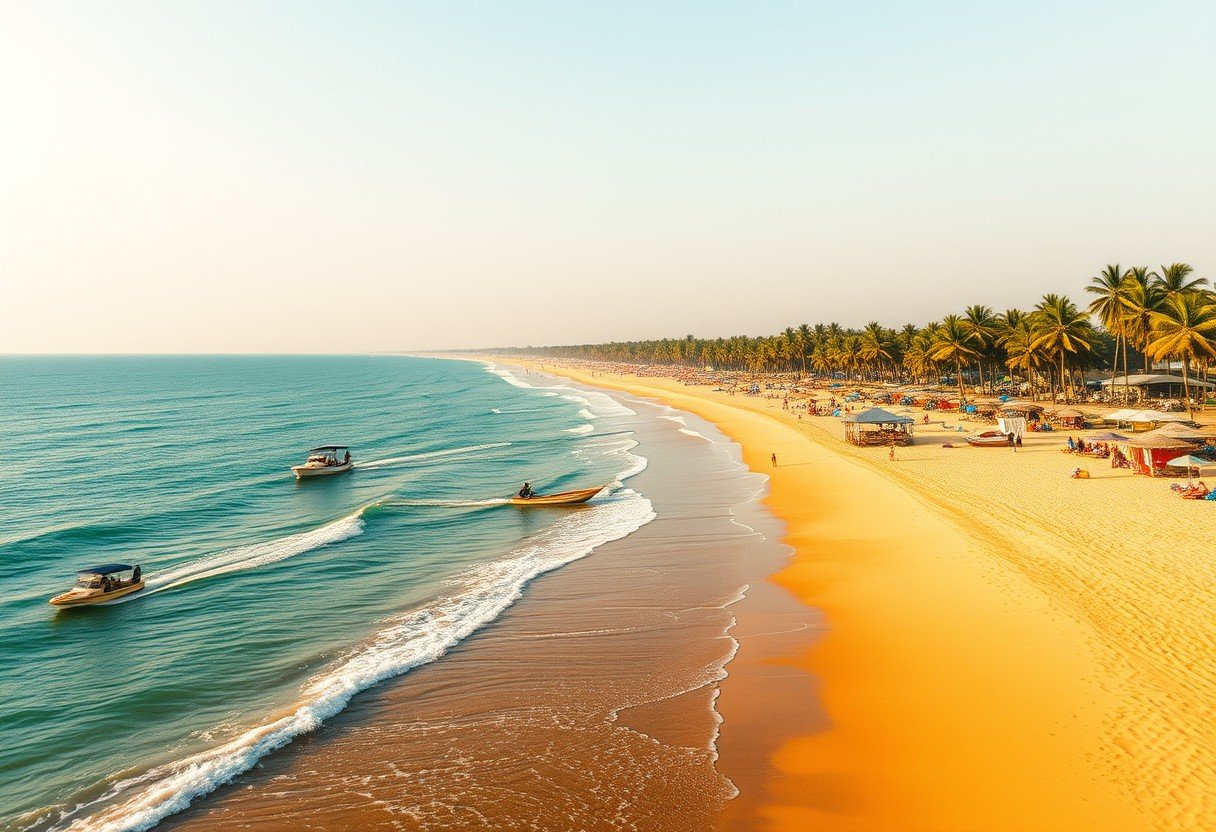
Over 30,000 visitors pass through Calangute’s shores each year, drawn by its sun-drenched sands and electric seaside culture. You experience a stretch of coastline where turquoise waves meet bustling markets, and Portuguese-era villas stand steps from beachfront shacks serving kingfish curry. This is not just a beach-it’s a living postcard coded 403516, pulsing with the rhythms of India’s most iconic coastal scene.
Key Takeaways:
- Calangute Beach draws over a million visitors annually, making it one of the most frequented coastal stretches in western India, with peak season transforming its shoreline into a tightly packed hub of sunbeds, water sports operators, and food shacks.
- The village sits at the center of Goa’s tourist triangle, flanked by Baga and Candolim, allowing for concentrated commercial development that includes everything from budget guesthouses to international chain restaurants and branded retail pop-ups.
- Despite its reputation for lively crowds and nonstop activity, Calangute retains pockets of cultural continuity, such as the 16th-century St. Alex Church with its whitewashed Baroque façade and annual feast celebrations that draw local devotees and curious travelers alike.
The Golden Crescent
Stretching over three kilometers along the western coast, this arc of soft golden sand forms the heart of Calangute’s appeal. You walk where traders, sailors, and pilgrims once gathered, now a vibrant hub where sun, sea, and culture converge in constant motion.
Sun-Drenched Sands
Each morning, the beach reawakens under clear skies, its fine-grained sand warming quickly beneath the rising sun. You find your spot near colorful umbrellas, where families build sandcastles and vendors circulate with chilled coconut water.
Arabian Sea Rhythms
Waves roll in with a steady pulse, their rhythm unchanged for centuries. You feel the undertow shift beneath your feet as fishermen haul nets just beyond the break line, their wooden boats bobbing in the swell.
Monsoon swells transform the shoreline with powerful currents, restricting swimming during peak months. You observe local surf schools offering beginner sessions in calmer pre-monsoon windows, aligning lessons with tidal predictability. Even in stillness, the sea’s presence dominates, shaping daily life and seasonal patterns along the coast.
Market Day Madness
Streets pulse with energy every Wednesday and Sunday when Calangute’s famed market spills across the main road, transforming the town into a sensory bazaar. You weave through tightly packed stalls where vendors hawk everything from sarongs to smartphones, each call blending into a rhythmic hum unique to Goan market days.
Tibetan Trinkets
Tibetan traders set up colorful displays of hand-knotted bracelets, singing bowls, and embroidered shawls near the market’s northern edge. You’ll find their stalls clustered beneath faded umbrellas, each piece carrying subtle craftsmanship passed down through refugee communities settled in the region.
Local Spice Aromas
Near the central spice row, mounds of turmeric, cardamom, and dried red chilies form vibrant pyramids that release sharp, earthy scents when stirred by passing breezes. You catch whiffs of cumin and coriander as vendors scoop fragrant heaps into paper cones for visiting cooks.
These spice vendors often source directly from inland farms in Quepem or Sattari, where monsoon-fed soils yield some of Goa’s most potent harvests. You can watch them grind whole spices on-site using hand-turned stone mills, releasing necessary oils that commercial processing often dulls. A mid-sized SaaS firm might optimize data flow, but here, freshness moves at the pace of human effort.
Culinary Crossroads
Calangute’s food culture thrives on contrast, where age-old Goan recipes meet global flavors under one sun-bleached roof. You’ll find butter garlic crabs sizzling beside Israeli couscous and Thai curries, each dish shaped by decades of travelers and trade. The air carries cumin, coconut, and woodsmoke, a blend as layered as the region’s colonial past.
Shack-Side Seafood
Freshness defines every plate at the beachfront shacks, where fishermen unload their morning catch just steps from the grill. You’ll see pomfret and prawns marinated in turmeric and lime, then flame-charred over coconut husks. A simple plastic stool and a cold Kingfisher complete the experience.
Feni and Folklore
This potent spirit, distilled from cashew apples or coconut palm sap, carries stories in every smoky sip. You’re not just drinking a liquor-you’re tasting resistance, ritual, and rural ingenuity passed through generations in hidden stills.
Cashew feni, in particular, emerges from small-batch distilleries tucked into village backyards, each with a method guarded like family scripture. You’ll hear tales of monsoon harvests, copper pot stills, and the moon’s phase affecting fermentation. Though now bottled and branded, the best versions remain those shared after a meal, poured by hand with a grin and a warning about its kick.
Architectural Whispers
Calangute’s skyline carries quiet traces of its layered past, where coral-stone walls and sloping red-tile roofs hint at centuries of cultural fusion. You see it in the way modern guesthouses sit beside weathered colonial facades, each structure a silent narrator of shifting eras and enduring coastal charm.
St. Alex Church
St. Alex Church rises with quiet dignity near the northern edge of the beach, its whitewashed walls and twin belfries a familiar landmark. You’ll notice the annual feast in December draws crowds, blending devotion with local tradition beneath its arched portico.
Portuguese Echoes
Portuguese Echoes linger in Calangute’s narrow lanes where pastel-hued villas wear ornate window grilles and azulejo fragments. You pass homes with names like “Villa Rosa” etched above iron gates, subtle markers of a colonial tongue still whispered in architecture.
Some homes retain inner courtyards open to the sky, a design once meant to cool interiors in the tropical heat, now preserved more for heritage than function. You can spot original lime plaster peeling to reveal hand-molded brick, or wooden beams darkened by decades of monsoon air, each detail a physical record of Portuguese domestic life adapted to Goan soil.
The Neon Nightfall
As dusk settles over Calangute, the beach transforms into a pulse of light and sound, where lanterns flicker to life and music spills from open-air shacks. You move through crowds drawn by the magnetic energy of the shore at night, when the air carries both salt and the scent of sizzling garlic prawns from roadside grills.
Tito’s Lane Energy
Tito’s Lane hums with a rhythm all its own, where basslines from decades-old hits echo between walls painted in neon graffiti. You feel the press of bodies on the cobblestones, drawn to bars like Brittos and Casanova, where tourists and locals mingle over overpriced cocktails and late-night dance-offs.
Moonlit Shorelines
Farther down the coast, away from the speakers and smoke machines, the beach quiets into stretches of soft sand lit only by the moon. You walk barefoot where fishermen still haul nets, their silhouettes moving like shadows across the water’s edge, undisturbed by the revelry just a kilometer inland.
That quiet stretch reveals a different Calangute, one where families gather around bonfires, children chase ghost crabs near tide pools, and couples sit wrapped in shawls listening to waves. A few vendors pass with coconuts and chai, their carts wheeled silently along the tideline, offering warmth without fanfare or price tags.
To wrap up
Calangute, one of India’s most recognized beach destinations, offers a dynamic mix of sun, sand, and seaside energy that draws visitors year after year. You’ll find no shortage of activities, from water sports and market strolls to dining on Goan seafood under string lights. For firsthand insights on planning your visit, check out Calangute, India: All You Must Know Before You Go (2026), where traveler experiences and updated conditions help shape realistic expectations. A mid-sized SaaS firm might streamline operations, but in Calangute, it’s the rhythm of the waves and the pulse of the crowd that define daily life.