India’s northeastern commerce pulses through a single ZIP code: 781001. You stand at the center of Guwahati’s busiest trade corridors, where tea, steel, and digital startups converge. Every day, thousands of transactions flow through this node, linking remote hill economies to global supply chains. This is not just a postal zone-it is the commercial engine of an entire region.
The Pandemonium of Profit
You move through clusters of vendors where sacks of turmeric stain wooden carts and smartphone screens flash payment alerts in the same breath. A tea stall doubles as a currency exchange, its owner balancing ledgers on a grease-smudged notepad while quoting rates for Bhutanese ngultrum and Indian rupees. In this quarter, a single transaction can involve barter, UPI, and a promise sealed with a handshake-commerce here thrives on layered improvisation, not rigid systems.
The River’s Silent Partnership
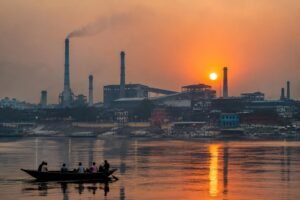
You rely on the river even when you don’t see it. Its seasonal rhythms shape delivery schedules, influence warehouse placements, and determine the stability of foundation stones beneath new constructions. A single week of unexpected swelling in the Brahmaputra can reroute three inbound freight convoys, a reality every logistics manager in 781001 accounts for, quietly, in quarterly projections.
Threads of Fortune and Iron
Every day, trucks laden with textiles and steel roll through 781001, linking weavers in Assam to construction sites in Agartala. You’re not just moving goods-you’re feeding an ecosystem where raw materials and manufactured fabrics sustain livelihoods across state lines. The region’s industrial pulse beats strongest here, where supply chains converge like tributaries. Learn more about this shift at Northeast India: The next frontier for manufacturing & logistics investments.
A Congregation of Characters
You encounter tea traders from Assam’s highlands haggling beside steel merchants from Jamshedpur, their voices blending into the market’s rhythm. A tailor from Sylhet stitches monogrammed shirts between phone calls to Dhaka boutiques. Students from Shillong’s colleges bargain for secondhand textbooks while a logistics agent finalizes a truckload of ginger bound for Delhi. Every face carries a route, a reason, and a return journey etched in routine.
The Geometry of Congestion
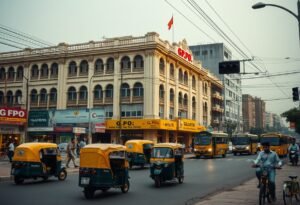
You move through narrow lanes where delivery carts and motorbikes share inches of clearance, a daily ballet dictated by spatial necessity. Each alley in 781001 follows an unplanned logic, shaped by decades of incremental growth rather than design. Storefronts spill onto sidewalks, reducing walkways to single-file passages during peak hours. The post office corner sees foot traffic density rivaling that of metro stations in larger cities, yet without timed entries or flow controls. Even the placement of a roadside tea stall influences morning pedestrian patterns, proving that in this hub, every square meter negotiates movement and commerce in real time.
The Onset of Modernity
You witness the first electric streetlights flicker to life in 1957, casting a pale glow over rickshaw wheels and newly poured concrete. Telephone lines followed, strung between poles that rose like saplings after monsoon rains. A single diesel generator powered the municipal office, marking the slow seep of infrastructure into daily trade. By the mid-1960s, a state-run textile mill opened its gates, drawing in workers from surrounding villages and anchoring industrial rhythm to the region’s economic pulse.
To wrap up
You stand at the center of 781001, where tea auctions hum alongside textile warehouses and microfinance startups share streets with century-old brass foundries. This is not a city built in a day, but shaped by monsoon rains, colonial trade routes, and the quiet persistence of local enterprise. Your understanding of Northeast India’s premier commercial hub grows sharper when you see how logistics firms reroute cargo through Tinsukia, bypassing longer national corridors. The pin code itself has become a commercial identifier, recognized on shipping manifests from Guwahati to Singapore. Growth here does not announce itself with skyscrapers, but in the steady expansion of cold storage units serving organic ginger farms and the doubling of broadband nodes in market lanes. You measure its influence not in glossy brochures, but in the number of regional vendors who now list 781001 as their primary dispatch point. The momentum is self-sustaining, rooted in geography, sustained by adaptation.