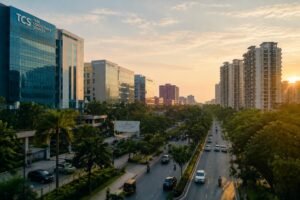
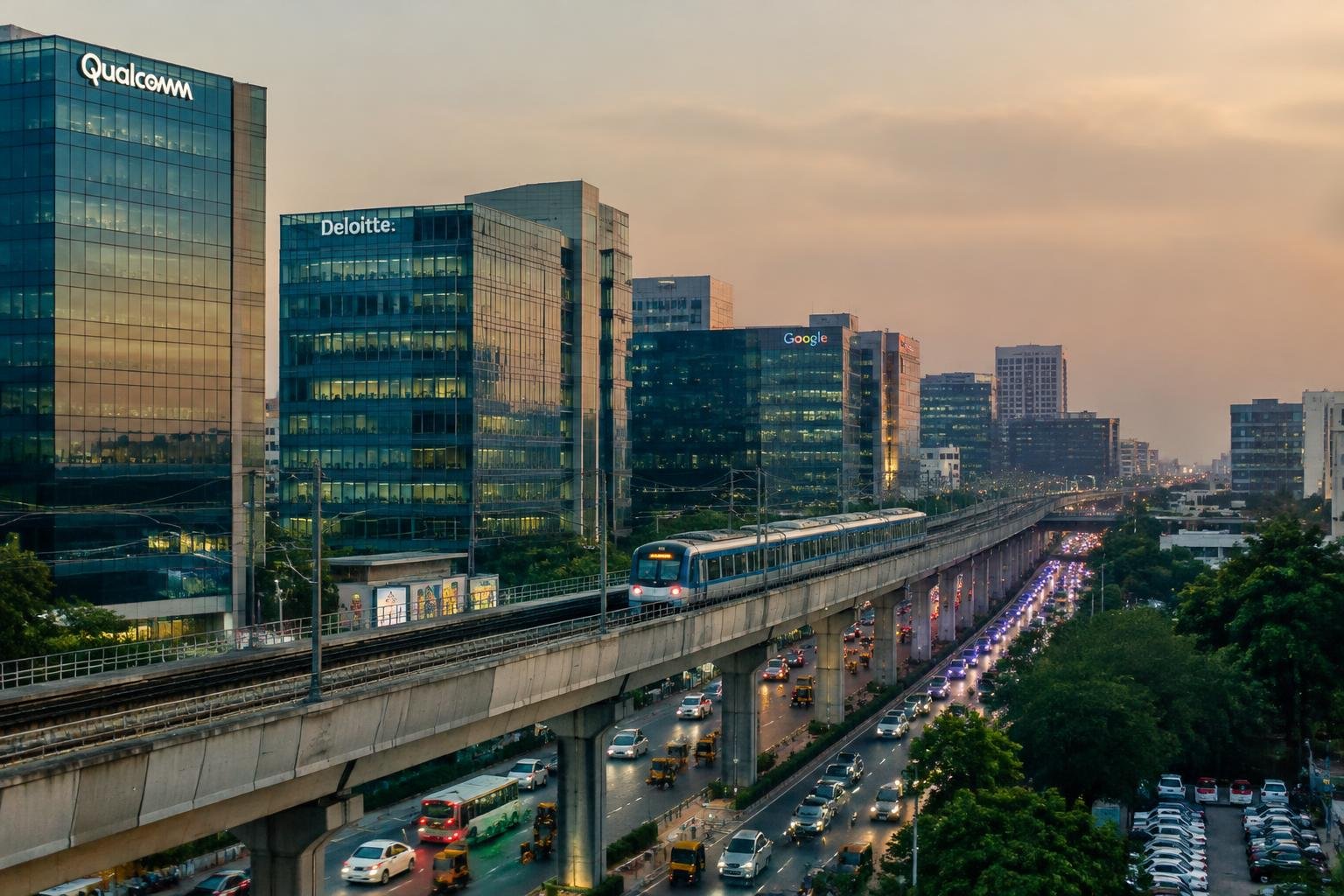
Glass office towers, technology campuses, and corporate headquarters make HITEC City a defining business district in Hyderabad, Telangana. If you work here, visit a client, or choose a nearby office, the 500081 postal area places you in a major hub for software, information technology services, and multinational companies. Its concentration of workplaces shapes daily life around Madhapur and Cyber Towers.
Understanding HITEC City’s Role in Hyderabad
HITEC City gives you a clear view of Hyderabad’s shift toward a knowledge-based urban economy. Its identity is shaped by technology-led development, corporate activity, and purpose-built commercial infrastructure, making it a prominent employment and business district. As you move through the area, large office campuses and connected workspaces distinguish it from traditional commercial centers. The district’s role is not separate from the city’s growth; it is part of Hyderabad’s expanding network of jobs, investment, and urban development.
Location, boundaries, and connectivity
Located in western Hyderabad, HITEC City is closely associated with Madhapur and lies within the wider technology corridor that extends toward Gachibowli and the Financial District. You can reach the area by road through routes including the Old Mumbai Highway and the Outer Ring Road, while the Hyderabad Metro’s Blue Line serves the district at Raidurg and HITEC City stations. Its boundaries are best understood as part of this connected cluster rather than as a single, sharply defined precinct.
How HITEC City fits into Hyderabad’s wider economy
Across Hyderabad, HITEC City functions as a major center for formal employment, office investment, and technology-oriented growth. Its concentration of workplaces draws workers from many parts of the city and supports demand for transport, housing, hospitality, and everyday services nearby. You can also see its influence in the expansion of western Hyderabad, where commercial development links the district with adjacent employment centers. This role makes HITEC City a key node in the city’s broader economic network.
- Office activity shapes weekday travel demand.
- Commercial buildings sit alongside hotels and serviced apartments.
- Dining and retail services cater to workers and visitors.
Types of Workplaces and Businesses
Across HITEC City, you encounter workplaces ranging from large, purpose-built campuses to compact offices and shared desks, alongside businesses that support technology operations. These settings serve different functions: some house engineering and product teams, while others accommodate corporate management, client services, or independent professionals. The district’s mix also includes restaurants, retail outlets, and business services near major office clusters, giving you a clear picture of how commercial activity extends beyond dedicated technology workplaces.
IT campuses, corporate offices, and coworking spaces
Large IT campuses in HITEC City typically bring software development, engineering, testing, and administrative teams together in office buildings with shared facilities. Corporate offices also house regional headquarters, finance departments, consulting teams, and client-facing staff, often in multi-tenant towers. If you work independently or for a small company, coworking spaces provide shared desks, private offices, meeting rooms, and reception services without requiring a full corporate lease. These formats are visible around the district’s major office clusters.
Technology firms, support services, and nearby amenities
Technology businesses include software product companies, IT services providers, cybersecurity firms, cloud operations teams, and research or engineering units. Their day-to-day work is supported by recruitment agencies, facilities managers, business process services, telecom providers, and professional firms such as legal and accounting offices. Around office buildings, you also find cafes, restaurants, convenience stores, pharmacies, banks, and fitness centers serving employees during workdays. These amenities cluster near prominent commercial developments and transit-linked streets.
Getting Around and Finding Key Areas
HITEC City’s offices, retail centers, and transit stops sit across a busy western Hyderabad corridor, so your route depends on the specific building or campus you need. Street names and complex entrances matter more than the broad HITEC City label when you arrange a cab or meet colleagues. Use a map pin for the exact gate, then confirm whether your destination is closer to a metro station, a main road, or an internal campus entrance.
Metro, road access, and last-mile travel
For metro access, use the Hyderabad Metro’s Blue Line, with HITEC City and Raidurg stations serving different parts of the district. From either station, you can continue by auto-rickshaw, app-based cab, or office shuttle, depending on your building’s location. Road access centers on the Hitech City Road and routes connecting Madhapur, Kondapur, and Gachibowli. During peak periods, junction delays can affect short trips, so share your destination’s exact entrance with the driver.
Major office clusters and nearby landmarks
Major office campuses cluster around Cyber Towers, Cyber Gateway, and the Raidurg side of the district, while Madhapur’s commercial streets connect many smaller workplaces and services. Shilparamam, beside the Cyber Towers area, is a recognizable landmark for locating nearby buildings. Toward Raidurg, Knowledge City and the Financial District connection mark a newer concentration of corporate offices. Check whether a meeting is at a tower, campus, or shared office, since each can have a separate access gate.
- Keep your building’s gate name with the address.
- Ask reception which tower hosts your appointment.
- Use the station exit closest to your destination.
Step-by-Step Guide to Visiting or Working in HITEC City
Set up your day in sequence: confirm the meeting or office details, arrange transport, and allow time for building access and local traffic. For a workday, keep your host’s phone number and appointment details available, then note the specific tower, entrance, and floor before leaving. Visitors attending a campus with security screening should carry valid photo identification and follow the host’s instructions at reception.
Plan your route, timing, and entry requirements
Choose a route to the exact building rather than relying on “HITEC City” as a single destination. Metro access at HITEC City station serves part of the district, while road travel by cab or auto-rickshaw may be affected by congestion near major office clusters. Check your building’s visitor policy with your contact, carry government-issued photo identification, and allow extra time for reception registration, security checks, and a possible vehicle-entry procedure.
Choose facilities, services, and places to eat
Identify the facilities you will use before arriving, including the office reception, meeting rooms, restrooms, and available charging points. For meals, HITEC City has food courts and cafés in commercial complexes, alongside restaurants in nearby areas such as Madhapur and Kondapur. Check whether your office campus restricts outside food or requires visitor access arrangements, and note a nearby option such as Inorbit Mall if you need several dining choices in one location.
Factors for Choosing a Workplace or Business Location
Your location decision depends on how well a site supports daily operations, employee access, client visits, and long-term plans. Define the roles that need to be onsite, the services your business depends on, and the space required for current work before assessing properties. A software team, a customer support operation, and a client-facing office can place different demands on the same address, even within HITEC City.
Connectivity, costs, infrastructure, and workforce access
Road access, public transport links, and typical commute patterns shape how easily your employees and visitors reach the office. Assess rent alongside maintenance charges, parking, utilities, and fit-out costs, since the quoted lease rate does not represent the full occupancy expense. Reliable power, telecom options, and nearby transport connections support daily operations, while access to relevant skills affects recruitment. A site near the Raidurg Metro station, for example, offers a different commute profile from one farther inside the business district.
Building facilities, services, and future growth
Building specifications determine whether a space suits your operations, from backup power and cooling capacity to lifts, security, and fire-safety systems. Check whether the floor plan supports your team’s work, meeting rooms, and equipment, and whether the landlord permits the required fit-out. Nearby food outlets, banks, and business services can shape employees’ routines and client visits. Lease terms, expansion options, and available adjoining space also matter if your headcount or operational needs change.
- Confirm visitor registration and access procedures.
- Ask how loading and courier deliveries are handled.
- Review generator coverage for common areas and office floors.
- Check building rules for signage and after-hours access.
Pros and Cons of HITEC City
Your experience of HITEC City depends on how closely its advantages match your work and daily routines. The concentration of employers, offices, hotels, and services creates practical choices for people working nearby, while the same concentration places pressure on roads, public spaces, and local prices. A corporate campus may offer convenient access to colleagues and business services, yet a short distance between buildings does not always mean a quick trip during busy periods.
Benefits of a major technology and corporate hub
For your career, a dense cluster of technology firms and corporate offices brings employers, specialist suppliers, and professional services within the same district. That proximity can make client meetings, recruitment, and cross-company work easier to arrange. Nearby restaurants, hotels, and business facilities also serve visiting colleagues and support long office days. If your role involves frequent meetings, being based near major employers and service providers can reduce the need to travel across Hyderabad for each appointment.
Challenges including congestion, costs, and density
During peak commuting hours, your journey through HITEC City can slow as office traffic converges on busy roads and junctions. High demand for commercial space and nearby housing also puts pressure on occupancy costs and everyday expenses, although rates vary by building and location. Dense development means crowded sidewalks, limited open space in some blocks, and busy food outlets at lunch. A late meeting can also make the return trip more difficult when several offices release staff at once.
- Office towers often have separate visitor registration procedures.
- Popular lunch spots can fill quickly on workdays.
- Some campuses provide shuttle services for employees.
- Building access rules can differ between companies.
Final Words
HITEC City, in Hyderabad’s 500081 area, brings technology offices, corporate campuses, hotels, and transport links together in a major business district. You can use its concentration of employers and services to shorten commutes between meetings or assess a workplace near key office hubs. Traffic, building access, and the distance between sites still shape daily routines, so allow time for local travel. From a corporate office to a nearby Metro station, the district’s infrastructure defines how you experience work here.